

Table of Contents
Singapore’s real estate market is strong and inviting in 2025. It offers great chances for investors and homebuyers. The market is shaped by a solid economy, smart government plans, and new development ideas.
The market is seeing more green and smart homes. Places like the Greater Southern Waterfront and Tengah are leading the way. These areas focus on being eco-friendly and using the latest in water management.
The rental market in Singapore is also doing well. This is thanks to more people living here, more expats, and students coming back. It’s a good time for those looking to make money from renting out properties.
Key Takeaways
- Singapore’s real estate market is poised for continued growth, with a focus on sustainability and eco-friendly developments.
- Rental demand remains high, driven by population growth and an influx of expatriates and international students.
- Rising interest rates in 2025 may impact affordability for first-time buyers and young families.
- Foreign investment in Singapore’s luxury property market is expected to persist, attracting high-net-worth individuals.
- Homeownership rate in Singapore remains high at 87.9% as of 2020.
Understanding the Singapore Property Market
The Singapore property market in 2025 is changing fast. It’s seeing urban transformation, more suburban living, and a focus on sustainability. Government policies, interest rates, foreign investment, and economic growth are key factors.
The market has many property types, from public housing (HDB) to private condos and landed homes. Who can buy what depends on citizenship and age. This meets the needs of locals and foreign investors.
Suburban areas like Punggol are becoming popular. They attract families and young professionals with good infrastructure. Woodlands is also growing, thanks to better transport links like the Thomson-East Coast Line.
The market is also changing, with more mixed-use developments and green buildings. These appeal to those who care about the environment. There’s also a rise in flexible office spaces and serviced apartments for remote work and short stays.
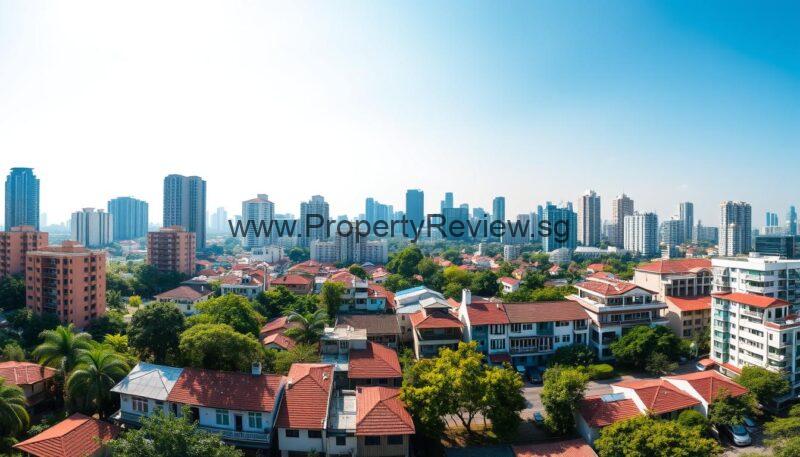
The Singapore property market is full of opportunities for locals and investors. By knowing the trends and factors, they can make smart choices. This helps them take advantage of Singapore’s real estate sector.
Types of Property Financing Available
In Singapore, there are many ways to finance a property. For HDB flats, HDB loans are a top choice. They offer good interest rates and flexible payment plans.
For private properties, banks and financial institutions offer many mortgage options. Fixed-rate home loans have higher interest rates than floating-rate loans. Banks like DBS, OCBC, and Citibank are among the best for fixed-rate loans on HDB properties.
Board-rate home loans are another option. The interest rates are set by the bank and tied to fixed deposit rates. DBS and Hong Leong Finance are known for these loans.
The Singapore Overnight Rate Average (SORA) is now the benchmark for floating-rate home loans. Banks like OCBC and DBS offer SORA-based loans for both HDB and private properties.
Buyers can also use their CPF savings for property purchases. The amount depends on the property type, purchase date, and lease left. This is a great way to fund your home.
For luxury properties, some banks have special mortgage packages. These offer competitive rates and flexible terms for high-net-worth individuals.
The Importance of Credit Scores in Financing
In Singapore, credit scores are key in getting property financing. A good score can help you get a better loan for your property. It also helps when working with trusted property agents.
Singapore’s credit scores range from 1,000 to 2,000. A higher score means you’re less likely to default. Your score is based on how you pay bills, use credit, and how long you’ve had credit. To keep a good score, pay bills on time and don’t use too much credit.
Lenders in Singapore look closely at credit scores for property loans. A good score can mean lower interest rates and more money you can borrow. But a bad score might mean you can’t get a loan or get worse terms.
Knowing how credit scores work in Singapore’s property market is important. It helps buyers and investors improve their credit and get better loans. Working with good property agents can also help you understand financing better.

Government Regulations on Property Financing
The Singapore property market is shaped by government rules. These rules affect how people finance their properties. The government has put in place cooling measures to keep the market stable. These include the Additional Buyer’s Stamp Duty (ABSD) and the Total Debt Servicing Ratio (TDSR).
The ABSD is an extra tax on buying property, for both locals and foreigners. It’s meant to stop people from buying just to sell later. The TDSR limits how much debt a buyer can take on. It ensures buyers can afford their homes.
The government also helps first-time homebuyers. They offer CPF housing grants and special schemes for HDB flats. These efforts are key in guiding property developers and the housing market in Singapore.
Choosing the Right Financing Option
When buying a property in Singapore, you have many financing options. It’s important to look at interest rates, loan terms, and your financial situation. This helps you pick the best financing choice.
Compare what different banks offer. Look at fixed and floating rate loans. Fixed-rate loans have steady payments, while floating rates change with the market. This might mean lower rates for now.
Talking to financial advisors is very helpful. They can explain all your financing options. They help you choose what’s best for your needs and goals in Singapore’s real estate market.
Remember important financial points. Aim for 30% down payment and keep monthly payments under 30% of your income. Also, the property price should not be more than 5 times your yearly income. Don’t forget about stamp duties, legal fees, and insurance costs in your budget.
By carefully looking at your options and getting advice, you can make a smart choice. This choice will help you buy a property in Singapore responsibly and successfully.
Mortgage Calculation and Affordability
For those looking to buy Singapore Property or Singapore Residential Properties, knowing how much you can afford is key. Your income, debts, and monthly costs play a big role in this. You should look at the Total Debt Servicing Ratio (TDSR) and the Mortgage Servicing Ratio (MSR).
The TDSR limits your total debt to 55% of your monthly income. The MSR, for HDB flats, caps mortgage payments at 30% of your monthly income. These ratios help figure out your maximum loan and ensure you can afford the property.
Recently, the Loan-to-Value (LTV) ratio dropped from 60% to 55% as of September 30, 2022. The Total Debt Servicing Ratio (TDSR) also went up from 3.5% to 4%. These changes affect how much you can borrow and should be part of your mortgage plans.
The 2025 Guide to Property Financing in Singapore has a mortgage affordability calculator. It uses your income, debts, and property details to assess your borrowing capacity and monthly payments.
Understanding mortgage calculations and affordability helps you make smart choices. It ensures your Singapore Property or Singapore Residential Properties fits your financial future.
The Home Loan Application Process
Exploring the Singapore property market can be challenging. But knowing how to apply for a home loan is key for buyers. The first step is to get an In-Principle Approval (IPA) from your chosen lender. This shows how much you can borrow, helping you avoid borrowing too much.
Lenders look at your Total Debt Servicing Ratio (TDSR) and Loan-to-Value (LTV) ratio. These are capped at 55% and 75% respectively. For HDB flats and executive condominiums, your monthly payments should not exceed 30% of your income. Understanding these rules helps you choose between HDB and bank loans, each with its own benefits and interest rates.
To apply for a home loan, you need to gather certain documents. These include your income statements, CPF statements, and property details. Don’t make mistakes like not checking your credit score or not comparing offers from different banks. Being well-prepared and informed makes the application process smoother. This way, you can find the right financing for your Singapore Condominiums or Property Agents investment.
Understanding Loan Terms and Conditions
When you’re financing a Singapore property, knowing the loan terms is key. You should look at the interest rate, loan length, and any penalties for early payment. It’s also smart to compare offers based on the effective interest rate, which includes all fees.
Think about how flexible the repayment plan is and if you can refinance later. The lender’s customer service is also important. Singapore’s property market changes a lot, and the right loan terms can help your financial future.
For those interested in Singapore Landed Properties or working with Singapore Property Developers, it’s vital to understand the loan terms. This ensures you make a choice that fits your financial goals. Knowing about property financing helps you move through the Singapore real estate world with confidence.
Refinancing Your Property Loan
In the changing Singapore property market, refinancing your home loan can be smart. It helps you manage your finances better. With prices and the market always shifting, you might find ways to cut your monthly payments and interest costs.
Refinancing is great when interest rates fall or your money situation gets better. You can compare your current loan with new options. This might mean switching lenders or changing your loan terms. But, think about the risks like extra costs, penalties, and longer loan times.
To refinance your Singapore property loan, you need to know your current loan details. Then, look into what’s available and get advice from mortgage experts. Legal and valuation fees can be talked down, and banks might give you rebates. You could also switch to a floating-rate mortgage for more savings, depending on the market.
Deciding to refinance should be a careful thought. Look at your financial goals, the current market, and the long-term benefits. With the right advice, Singapore homeowners can choose wisely for their financial future.
Future Trends in Property Financing
Singapore’s real estate market is changing fast. Experts say property financing will see big changes soon. These changes include more digital tools, artificial intelligence, and new ways to finance.
The loan application process is getting a digital makeover. This means buyers can get financing faster and easier. Artificial intelligence will also help lenders make better decisions, making the process more accurate and personal.
New financing models are on the horizon. Green financing for eco-friendly properties is one example. This shows the world’s growing focus on being green, which will affect Singapore’s property market too.
Blockchain technology is another trend to watch. It could make property transactions safer and more transparent. This could make the financing process more efficient and trustworthy.
As the market evolves, it’s crucial for buyers and investors to keep up. Knowing about these trends can help them make smart choices. This way, they can be ready for the future of Singapore’s real estate.
Resources for Property Buyers and Investors
When exploring the Singapore property market, buyers and investors find many resources. Government sites like the Housing Development Board (HDB) and the Urban Redevelopment Authority (URA) share official info. They provide statistics and insights into the residential market.
Online portals like PropertyGuru, 99.co, and EdgeProp offer detailed listings and market analysis. They also have tools for comparing properties. Professional groups like the Institute of Estate Agents Singapore (IEA) and the Singapore Estate Agents Association (SEAA) offer updates and educational programs.
For comparing loans, financial comparison websites are useful. They help buyers find the best rates and terms. Seeking advice from experienced groups and attending seminars can also help. This keeps buyers informed about market trends and financing strategies.


