

Table of Contents
Singapore’s real estate market in 2025 is full of opportunities. It’s expected to grow by 4.5%, thanks to strong demand in homes and businesses. The economy is stable, and the location is strategic, attracting more people.
The luxury market is expected to grow faster. Property prices in top areas like Marina Bay and Orchard Road could hit SGD 3,500 per square foot. Vacancy rates are low, dropping to 5% in 2025 from 7% before.
Rental yields are around 3.2%, showing a rise in demand, especially in prime spots. This mix of price growth and rental income makes Singapore’s real estate a great investment in 2025.
Key Takeaways
- Singapore’s real estate market is projected to grow by 4.5% in 2025, driven by strong demand and a stable economy.
- Luxury properties in prime areas like Marina Bay and Orchard Road are expected to see higher growth rates.
- Rental yields average around 3.2%, reflecting rising demand, especially in prime locations.
- The market is characterized by low vacancy rates, decreasing to 5% in 2025 from 7% in previous years.
- Singapore’s strategic location and growing population make it an attractive investment destination for real estate in 2025.
Understanding the Singapore Property Market Landscape
Singapore’s property market is changing fast. New areas like the Greater Southern Waterfront and Tengah are opening up. They offer luxury homes, commercial spaces, and more.
Suburban living is also on the rise. Places like Sengkang and Punggol are becoming popular. This is thanks to better transport and the shift to working from home.
Sustainability is now a big deal. There’s a push for green buildings, smart homes, and eco-friendly features. Despite cooling measures, foreign investors still find Singapore’s luxury market appealing.
Prices are going up, with Marine Parade seeing a 4.9% increase. Million-dollar HDB flats are in high demand, with prices over $1 million. Even though foreign buyers are fewer, there’s a growing interest in more affordable homes in the suburbs.
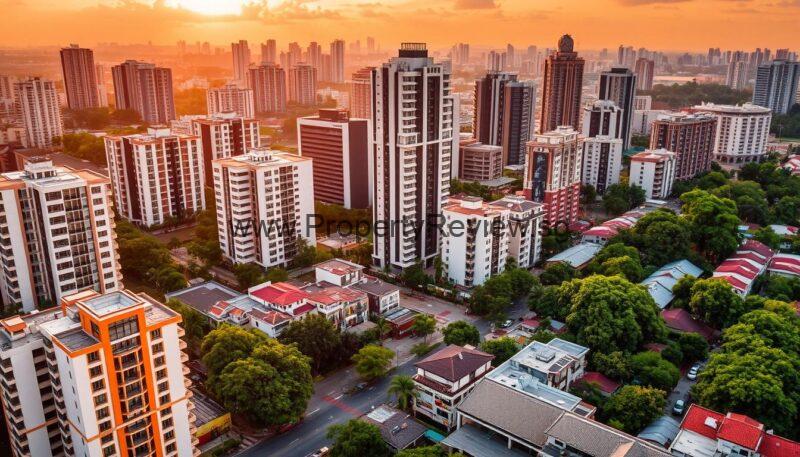
The market is expected to keep growing. Prices are set to rise by about $400 per square foot every five years. The Core Central Region has prices over $3,000 per square foot. The Rest of Central Region and Outside Central Region also see high prices, making Singapore a great place for housing and condos.
Economic Factors Impacting Real Estate in Singapore
Singapore’s strong economy is helping the real estate market in 2025. The steady GDP growth is making people want more homes and office spaces. Interest rates are still low, thanks to the Monetary Authority of Singapore’s careful planning.
Fixed-rate mortgages are becoming more common. This is because of the recent slight increase in borrowing costs. The low-interest-rate years have kept the market stable.
The economy is making the Central Business District and innovation hubs like Jurong more popular. More people are moving to Singapore, which means more need for homes. The government’s rules on debt and loans are keeping the market safe from getting too hot.
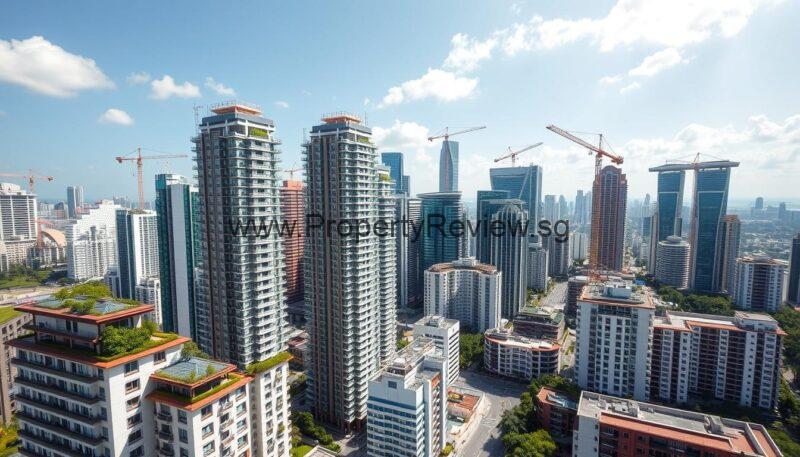
Developers are now building mixed-use projects. These offer convenience and attract different buyers and renters. Eco-friendly buildings are also becoming more popular, thanks to those who care about the environment.
New types of real estate, like flexible offices and serviced apartments, are meeting changing needs. These products are responding to what people want and what the market is doing.
Government Policies Shaping the Real Estate Sector
In the dynamic Singapore real estate market, government policies are key. They control foreign ownership, especially in public housing and landed properties. The Additional Buyer’s Stamp Duty (ABSD) is a 20% tax on foreign buyers of homes, aimed at stopping speculative investments.
Since 2009, cooling measures have been in place to prevent the market from overheating. These include stricter loan-to-value (LTV) limits, higher ABSD, and changes to the Total Debt Servicing Ratio (TDSR). In April 2023, the ABSD for foreign buyers was increased to 60%, making it harder for overseas investors to buy homes.
The government’s efforts in urban development and infrastructure make Singapore’s real estate more appealing. New policies also support the creation of smart and sustainable homes. Executive Condominiums (ECs) are a hit with first-time homebuyers and young families in Singapore.
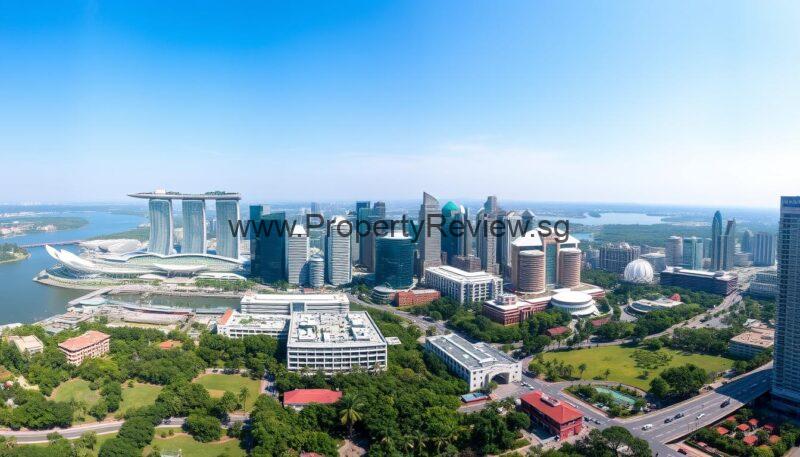
As Singapore’s population ages, future policies might focus on retirement-friendly housing. They might also encourage multi-generational living. The use of smart home technology and sustainability in real estate development will likely shape the market in the coming years.
Popular Neighborhoods for Property Investment
Singapore’s real estate market is changing fast. Some areas are becoming top picks for investing in 2025. The Central Business District, Orchard Road, and Marina Bay are favorites for homes and businesses.
The Greater Southern Waterfront is new and exciting. It offers waterfront living and big developments.
Suburbs like Sengkang, Punggol, and Bishan are getting more popular. They have better transport links and bigger homes. The Jurong Innovation District is also attracting investors with its tech focus.
Bukit Timah is rich and close to top schools, making it a great spot for investors. Bishan is central, has good transport, and is family-friendly. Woodlands is becoming hot thanks to government projects and the RTS link to Johor Bahru.
The East Coast, including Katong and Marine Parade, is rich in culture and expat appeal. It’s also getting a new MRT line, promising good returns. Jurong East is set to be Singapore’s second business hub, with big growth in housing and rentals.
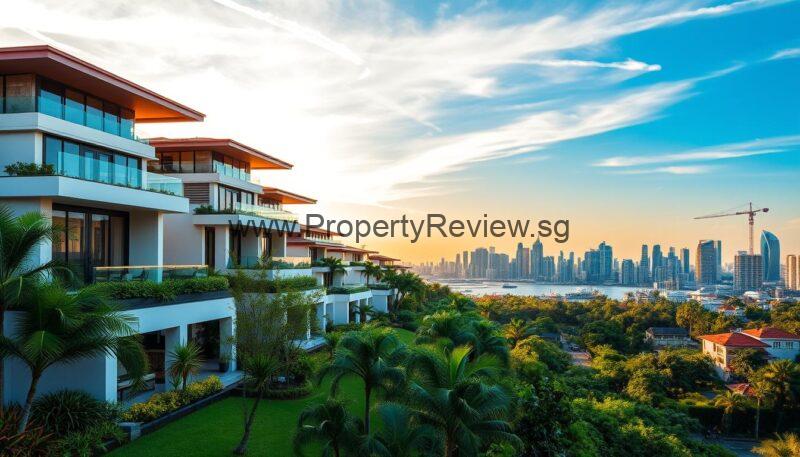
Punggol is turning into a smart city, with tech and better transport. It’s a good choice for those looking for value and growth. Orchard Road is Singapore’s top shopping area, with limited new homes and high demand from wealthy buyers.
Serangoon has a community feel, great schools, and a lively food scene. It’s a good mix of lifestyle and investment. Singapore’s many neighborhoods offer different investment opportunities in 2025.
Types of Properties to Consider in 2025
Singapore’s real estate market is growing, offering many options for investors in 2025. Residential properties, like Singapore condominiums, are popular for their rental income. Luxury condos in areas like Orchard Road and Marina Bay attract wealthy individuals and foreign investors.
Commercial properties, especially in the CBD and innovation hubs, offer growth potential. Mixed-use developments are becoming popular, combining homes, shops, and offices. Shophouses in lively areas are also attracting investors looking to diversify their portfolios.
Sustainability and smart home tech are key in the Singapore housing market. By 2025, more homes will use eco-friendly materials and save energy. Homes with green spaces and public areas will also be in demand.
Whether you’re looking at condos, commercial spaces, or shophouses, focus on well-located, promising properties. These can offer good rental income and value growth. With the right plan and knowledge, 2025 could be a great time to grow your property investments in Singapore.
The Role of Foreign Investment in Singapore Real Estate
Foreign investment is key in Singapore’s real estate market in 2025. The luxury property market, especially in the Core Central Region, draws buyers from China, Indonesia, and India. Despite cooling measures and extra taxes, Singapore’s stability, low taxes, and strong legal protections keep it appealing.
Foreigners eye prime areas like Orchard Road, Sentosa, and Marina Bay. The government tries to balance foreign investment. This ensures the market grows sustainably. Recently, foreign buyers bought fewer units, with 321 condominiums sold from May 2023 to April 2024, down from 1,054 the year before.
The luxury segment draws the most foreign investment. Foreigners mainly buy high-end condos in prime areas. But, cooling measures like the Additional Buyer’s Stamp Duty (ABSD) and Total Debt Servicing Ratio (TDSR) framework curb speculation. They promote financial wisdom among buyers.
Despite these measures, Singapore’s real estate market still attracts foreign investment. In 2023, real estate made up 3.1% of Singapore’s economy. The country was the top foreign investment destination globally. Over half of real estate transactions in Singapore come from abroad, with US$4.7 billion in deals from 2020 to mid-2021.
Financing Your Singapore Property Investment
Investing in Singapore property needs careful financial planning. In 2025, buyers can look at bank loans and special mortgage packages. With interest rates around 2.5%, it’s a good time to get financing. It’s important to compare loans to find the best terms.
Singapore has rules for borrowing, like Loan-to-Value (LTV) limits and Total Debt Servicing Ratio (TDSR). For private homes, the LTV is 75%, needing at least 5% cash down. HDB loans also have a 75% LTV, with options for downpayment using cash or CPF.
Buyers should also think about property taxes, which can be 0% to 16% for owner-occupied homes. Stamp duties, like the Additional Buyer’s Stamp Duty (ABSD) for foreign buyers, add to the cost of buying a property in Singapore.
The Singapore government has schemes to help, like using CPF savings and housing grants. These can make buying a property easier for eligible citizens. They are key to a good investment strategy in Singapore.
The Importance of Timing in Real Estate Investment
Timing is key in the Singapore real estate market. The market is stable, with a 4.5% growth rate and low vacancy rates. Investors should look at areas like the Greater Southern Waterfront and Jurong Innovation District for long-term growth.
The market is shaped by government policies, economic conditions, and global trends. The current low-interest-rate environment and stable economy are good for investing. But, investors need to watch out for market volatility and policy changes.
Investors should carefully plan their entry and exit strategies. The market can be unpredictable, and emotional decisions can lead to big losses. By focusing on long-term growth and understanding the market, investors can make better choices.
Conclusion: Is 2025 the Right Year for You?
Singapore’s real estate market in 2025 is very promising for investors. The market is strong thanks to good economy and smart plans. This makes Singapore Property Investment very appealing.
Key trends like urban changes, suburban growth, focus on green living, and more foreign investment are key. They show the market’s potential for growth in the Real Estate Market Singapore.
When thinking about investing, consider the location, type of property, and financing. Also, think about the property’s future value. Keeping up with market trends and getting expert advice can help you make smart choices.
With the right approach and knowledge of the market, 2025 could be a great time to invest in Singapore Property Investment. By matching your goals with the market’s growth, you can succeed in Singapore’s real estate.


