

Table of Contents
Singapore’s real estate market is strong and appealing in 2025. It offers chances for both investors and homebuyers. The market is backed by solid economic basics, government actions, and plans for growth.
Urban changes are happening, with new areas like the Greater Southern Waterfront growing. Places like Tengah and Punggol Digital District are also seeing changes. Suburban living is becoming popular, with areas like Sengkang and Punggol attracting more people. They offer affordable condos, bigger homes, and easy access to amenities.
In 2025, homes will be built with green materials and tech to cut down on carbon emissions. This shows Singapore’s dedication to being eco-friendly. The luxury market, especially in the Core Central Region, will still draw in foreign buyers. This is because of top-notch amenities and legal safeguards.
There will also be a high demand for rental homes in prime spots like the CBD and Orchard Road. This will give investors good returns.
Key Takeaways
- Singapore’s real estate market is supported by strong economic fundamentals and strategic development plans.
- Suburban living is on the rise, driven by more affordable housing and improved accessibility.
- Sustainability and smart home features are becoming increasingly important in new developments.
- The luxury property market continues to attract foreign buyers, especially from Asia.
- Rental demand remains high in prime locations, offering attractive returns for investors.
Understanding the Singapore Property Market
The Singapore property market in 2025 is changing fast. It’s seeing new urban areas, more people wanting to live in suburbs, and a push for green homes. Factors like government rules, interest rates, and foreign investment play big roles. Despite ups and downs, Singapore remains a great place for investors.
Foreign buyers like Singapore because it offers good returns without taxes on gains or inheritance. They can choose from many types of properties, including new and resale HDB flats, ECs, and private condos.
The Core Central Region (CCR) in Singapore is known for its luxury homes and the CBD. Prices here have seen ups and downs but are now stable. The Rest of Central Region (RCR) offers mid-range prices that keep going up. The Outside Central Region (OCR) is growing because of its affordability and space.
Types of Properties Available in Singapore
Singapore has a wide range of properties to meet different needs and tastes. The residential market includes public housing, private homes, and a special type called executive condominiums (ECs).
Most homes in Singapore are public housing, known as HDB flats. They make up over 80% of all homes. These affordable places are for Singaporeans and permanent residents. They come in sizes from studio to 5-room flats.
For those wanting to own a private home, there are condos and landed houses. Condos have many amenities, while landed homes offer a private feel. Buying these homes has its own rules, especially for foreigners buying landed properties.
Singapore’s property scene has something for everyone. It suits people at all stages of life and income levels. This ensures there’s a home for everyone in Singapore’s growing real estate market.
Legal Requirements for Foreign Buyers
Foreign buyers in Singapore face some rules and extra taxes when buying property. They can buy private apartments and condos freely. But, they need government approval to buy landed properties.
To qualify, buyers must be at least 21 years old. They also need to provide a passport, proof of income, and bank statements.
Foreign buyers must also pay the Additional Buyer’s Stamp Duty (ABSD), which is 30% of the purchase price. This tax, along with legal procedures and lawyer fees, makes buying property more complex. Banks also offer lower loan-to-value ratios to foreign buyers, usually 60-70%.
Despite these hurdles, Singapore’s property market is still attractive to global investors. The stable politics, strong economy, and steady property value growth are big draws. With the right help, foreign buyers can find their perfect investment or home in Singapore.
Financing Your Property Purchase
Buying a property in Singapore means knowing your financing options. The market offers bank loans and HDB loans for those who qualify. But, your borrowing power is limited by the TDSR and LTV rules.
Homebuyers can use their CPF savings to buy a property, within certain limits. Also, government grants like the Enhanced CPF Housing Grant and Proximity Housing Grant help first-time buyers. These grants make homes more affordable.
The Eco-Care Home Loan is a new, eco-friendly financing option. It won the Mortgage Product of the Year award in 2021. This loan has a special pricing package and a $88 bill rebate for signing up by December 31, 2023.
Investing in property in Singapore requires looking at all financing options and costs. This includes stamp duty, legal fees, and agent’s commissions. Knowing the housing market and financing well helps buyers make smart choices and feel confident in their purchase.
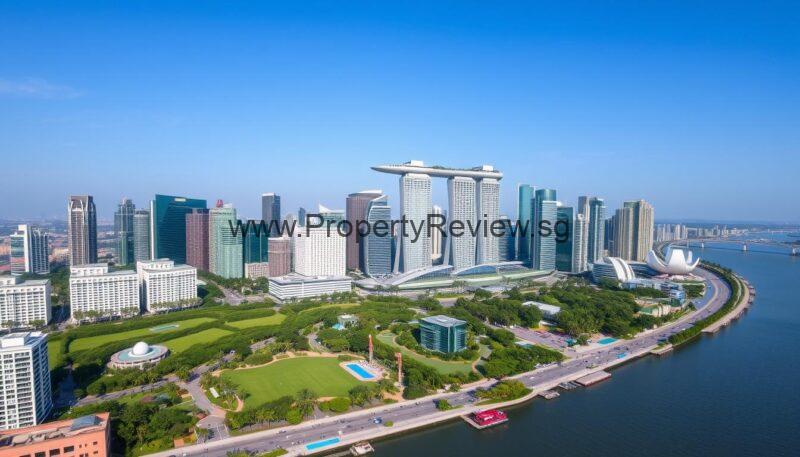
Choosing the Right Location
In Singapore, the location of a home is very important. Places like Orchard, Marina Bay, and Tanjong Pagar offer a lively city vibe. On the other hand, Punggol and Tampines are great for a quieter life.
It’s key to find a place close to MRT stations, schools, shops, and parks. The Urban Redevelopment Authority’s Master Plan helps by showing what’s coming in each area. This helps buyers make smart choices.
New areas like the Greater Southern Waterfront and Jurong Lake District are promising. They’re set to grow and could be good investments for the future.
Properties in Central Singapore are the priciest, with prices over S$20,000 per square meter. In the North, new condos cost between S$13,000 and S$15,000 per square meter. The East averages around S$17,000 per square meter. The West is more affordable, with prices from S$14,000 to S$18,000 per square meter.
Knowing the differences in Singapore’s neighborhoods helps buyers choose wisely. It’s about finding a place that fits your lifestyle and investment plans.
Engaging a Real Estate Agent
When you’re in the Singapore property market, a licensed real estate agent can be a big help. They give you deep insights into the market, handle the negotiations, and take care of all the paperwork. Look for an agent with lots of experience, who knows the area well, and has a good track record.
Make sure the agent is registered with the Council for Estate Agencies (CEA). A good agent will be quick to respond, clear about their fees, and give you detailed market analysis. They should also help you compare properties to make a smart choice.
Commission rates for agents in Singapore can be talked about, and there’s no fixed rate. You should pay the agency directly, not the agent themselves. Using CEA’s estate agency agreements is a good way to protect both sides in a deal.
With a reliable and knowledgeable agent, you can move through the Singapore property market easily. This ensures your buying or selling process is smooth and well-informed.
Understanding the Purchase Process
Buying a property in Singapore can be tricky. But knowing the steps is essential for a smooth deal. You’ll need to view properties, make an offer, get financing, hire a lawyer, and finish the legal paperwork.
For new properties, buyers might enter a ballot to get their unit. The time it takes can vary a lot. Resale homes usually take 8-10 weeks, while new ones can take longer because of construction.
The main steps are getting an Option to Purchase (OTP), exercising it, and finishing the sale. Buyers should also be ready for different fees and duties. These include the option fee, confirmation payment, Buyer’s Stamp Duty (BSD), and Additional Buyer’s Stamp Duty (ABSD).
In 2020, 87.9% of Singaporeans owned their homes. This is thanks to government policies and financial help like the Central Provident Fund (CPF) housing grant. You must be at least 21 to buy a property, and CPF savings can help with the costs.
It’s important for both locals and foreigners to understand the Singapore property buying process. With the help of a real estate agent and lawyers, buyers can make smart choices. This ensures a smooth transaction in the lively Singapore property market.
Factors to Consider Before Buying
Thinking about investing in a property in Singapore? It’s important to look at a few key things. Consider how much the property might be worth in the future, the income it could bring, and if it fits your lifestyle.
Check the property’s age and lease length, especially for leasehold properties. Also, think about the chance of en bloc sales. Look at the area’s amenities, future plans, and how livable it is. For families, being close to schools and kid-friendly spots is a big plus.
Investors should study the market, rental demand, and how property values might grow. Recent numbers show 52% of homeowners aged 22 to 29 in Singapore want to buy another property. Meanwhile, 44% of those aged 30 to 39 are interested in real estate.
Financing is available for both HDB and private property buyers in Singapore. You can borrow up to 75% of the property’s value for your first home. But, there’s a Total Debt Servicing Ratio of 55% of your monthly income for all debts. Also, buyer’s stamp duty rates range from 5% to 60%, based on your residency and property ownership.
By carefully looking at these factors, you can make a smart choice. This choice should match your financial goals and personal preferences in the Singapore property market.
Assessing Property Value
Understanding a property’s value is key in Singapore’s fast-changing real estate scene. Buyers can use many tools to find a property’s fair market price. Websites, the Urban Redevelopment Authority’s (URA) data, and expert valuations offer insights into property prices and the market.
Looking at recent sales of similar properties is a smart move. Location, size, age, and condition greatly affect a property’s value. For HDB flats, the HDB Resale Price Index is a useful guide.
Professional valuers provide detailed reports based on market trends and property details. They consider rental yields, construction costs, and market trends. Their unbiased views help buyers make smart choices in the property market.
Finding a property’s Annual Value (AV) is also important. The AV is usually the gross annual rent, minus furniture and maintenance costs. The size, location, and condition of the property are considered to calculate the AV. Special properties might need different valuation methods, like the Profits Method.
By using these resources, buyers in Singapore can make better decisions. They can ensure they’re getting the best value in the Real Estate Singapore market.
Navigating the Rental Market
Singapore’s property market is booming, offering many rental options. This is great for those who don’t want to buy a home yet. Renting is cheaper upfront and gives more freedom.
Looking for a rental in Singapore means you’ll see properties, talk about the lease, and sign a contract. It’s important to know your rights and duties under Singapore’s laws. These laws cover things like deposits, rent, and keeping the property in good shape.
The COVID-19 pandemic has changed the rental scene in Singapore. Rents for HDB flats and private homes have gone up. But, private home rents have dropped because of new buildings. About 60% of renters are foreigners, and 40% are locals.
Choosing a rental in Singapore depends on location, type of property, and your budget. Areas like Orchard and Katong are favorites for private homes. HDB flats are more affordable in many neighborhoods.
Now, renters have more power because demand and supply are balanced. But, landlords face higher taxes and maintenance costs. This can lower their profits. Knowing about both private and HDB rental markets is key for making smart choices.
Future Trends in Singapore Property
Singapore’s real estate market is set to see big changes. These changes will bring new chances for investors and people looking to buy homes. Sustainability and smart tech will be key, with a focus on green buildings and digital features that make life better.
Rules for foreign buyers might change, which could shake things up. Areas like the Greater Southern Waterfront are expected to grow, offering more choices in the Singapore Property market. Government actions, like cooling measures and smart land use, will also shape the market. This means Real Estate Singapore experts and Property Investment Singapore fans need to keep up and be ready to adapt.
New tech will change how we buy and manage properties, making things easier and more convenient. The idea of live-work-play in new buildings will become more popular. It meets the needs of today’s Singaporeans. As the market evolves, it’s crucial for investors and buyers to watch these trends and policy shifts. This way, they can make smart choices in the changing Singapore Property scene.


