

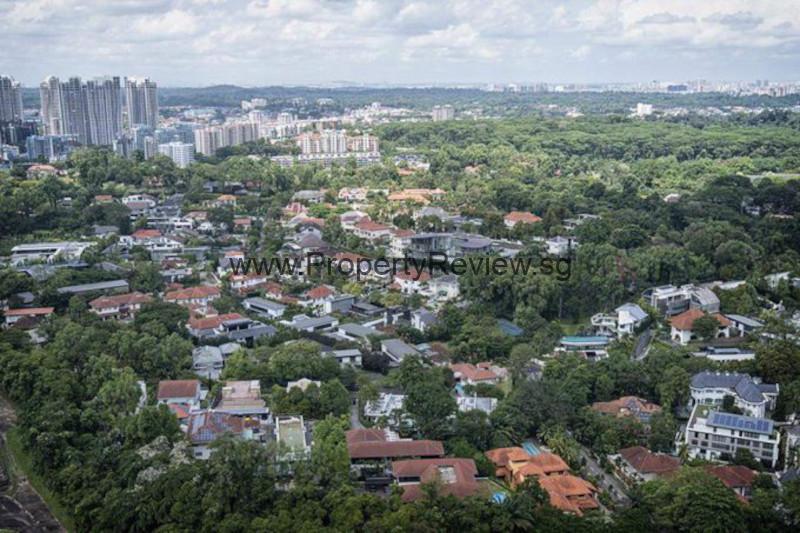
Singapore’s real estate boom has led to a record low number of new homes for sale, which could make it harder for the government to calm the market.
Even though property restrictions have already started to take effect, a lack of supply and strong demand during the pandemic may keep pushing up prices, which rose the most in more than a decade last year.
It’s a big change from 2019, when Singapore had too many homes and it was hard for prices to go up. Covid-19 restrictions have led to a lack of workers, which has slowed down construction, made home buyers wait longer, and made it more expensive for developers, who also have to deal with higher taxes and inflation.
“Private home prices are likely to go up because there aren’t enough private homes for sale,” said Alice Tan, at Knight Frank in Singapore.
Wong Xian Yang, head of research at Cushman & Wakefield in Singapore, says that as of the first quarter of this year, 14,087 unsold units were still being built in Singapore. This is the lowest number of unsold units since this information became available in 2006. That’s a big change from two years ago, when there were 30,162 extra units.
Christine Sun, at OrangeTee & Tie, said that even though the government plans to put more land up for sale this year, that land won’t hit the housing market until 2023.
“Because of this, the supply shortage might still last for a while.”
Analysts think that between 7,000 and 8,000 new private apartments could be built this year. Sun said that is less than the average of 10,750 new units built each year from 2012 to 2021.
It doesn’t help that developers are having trouble increasing supply. Buying a lot of land for residential development is risky. They have 5 years to build and sell all the units or pay a levy that was recently raised from 25% to 35%.
Tan said that this could lead builders to look for smaller pieces of land or form groups to share the costs and risks of building in the near future.
After prices went up a lot in 2021, Singapore’s government took steps in December to slow down the housing market. There’s no doubt that it has had some effect. Prices aren’t going up as fast as they used to, and sales have been slow in the first two months of this year. But analysts think that the curbs will only help for a short time because of the problems with supply and demand. Already in March, home sales have gone up, which shows that people want to buy homes, especially those who want to move from public to private housing.
Wong said that developers don’t have much reason to lower prices as their stock sells out. Aside from inflation and a lack of workers, he said, an increase in the consumption tax that will take effect next year could also cause prices to go up.
“Because there aren’t many homes for sale and the economy is still growing, prices are expected to rise by about 2% to 3% overall, despite recent measures to slow things down,” Wong said.
Even though Russia’s invasion of Ukraine has shaken up the markets, investors may still want to buy homes in Singapore. Sun said that the economic headwinds could make investors put their money in residential property, which has long been seen as a safe investment because of the city’s stable government and well-developed legal and financial services.
Wong said, “Demand for private residential properties would remain stable.” “Many people still think that private property is a way to keep and make money.”


