

Table of Contents
The Singapore property market in 2025 is full of ups and downs. Investors and homebuyers face both chances and hurdles. For example, average rents for private condos in top areas are SGD 4,000 to SGD 7,000 monthly. Rental returns usually range from 2.5% to 3.5% each year.
Prices for private homes vary a lot. In prime spots, they go over SGD 20,000 per square meter. But in suburbs, they’re between SGD 10,000 to SGD 15,000 per square meter.
Many things influence the Singapore real estate market. These include government rules, limits on foreign buyers, and property taxes. Yet, the market is expected to grow by 4.5% in 2025. This growth is driven by high demand in homes and offices.
Key Takeaways
- Average rents for private condominiums in prime districts range from SGD 4,000 to SGD 7,000 per month.
- Rental yields in Singapore generally fall between 2.5% to 3.5% annually.
- Private residential property prices vary significantly, with prices per square meter exceeding SGD 20,000 in prime areas.
- The projected growth rate for the Singapore property market in 2025 is estimated at 4.5%.
- Regulatory factors, such as government cooling measures and foreign buyer restrictions, shape the market dynamics.
Overview of the Singapore Property Market in 2025
The Singapore property market in 2025 looks cautiously optimistic. This is thanks to a stable economy, limited land, and a growing population. Trends show rising rental demand, especially in prime areas, and a focus on sustainable buildings.
Vacancy rates have dropped to 5% in 2025, down from 7% before. The luxury segment and properties near MRT stations are expected to grow. The Core Central Region (CCR) has seen price increases, with new homes reaching S$3,246 per square foot and resale homes at S$2,103 per square foot.
The Greater Southern Waterfront and Jurong Innovation District will boost demand for homes and offices. Suburbs like Sengkang, Punggol, and Bishan are seeing more affordable condos and bigger homes. By 2025, more buildings will use sustainable materials to cut down on carbon emissions.

The rental market in Singapore is expected to stay strong in 2025. This is due to a growing population and demand from expats and international students. Foreign investors, especially from China, Indonesia, and India, will likely keep an eye on Singapore’s luxury properties.
Economic Factors Impacting Property Values
Singapore’s property market is heavily influenced by economic factors in 2025. With interest rates averaging around 2.5%, it’s an attractive time for buyers to secure financing. The US Federal Reserve’s rate cut cycle is expected to boost market confidence and ease debt burdens.
Singapore’s strong economy, tight labor market, and stable Singapore dollar contribute to preserving capital and supporting the residential property market.
The improving economic outlook and Singapore’s reputation as a safe Singapore property investment destination are key factors driving property values. Limited land scarcity in the city-state leads to intense competition, which in turn drives up Singapore housing market prices. The balance between supply and demand also significantly impacts property values in the country.
Factors like proximity to public transportation, schools, shopping malls, and amenities also command higher prices in the Singapore property market. Government policies, such as cooling measures and housing grants, play a crucial role in shaping the dynamics of the Singapore housing market. Overall, the Singapore property investment landscape remains attractive, with strong economic fundamentals supporting the continued growth of property values in the coming years.
Residential Property Landscape
The residential property scene in Singapore is quite varied. HDB resale prices for a 4-room flat can be between SGD 400,000 and SGD 800,000. This depends on the estate’s age. Private property prices in the Core Central Region (CCR) have been steady, even with cooling measures.
New condos in prime areas start at SGD 2,500 per square foot. Meanwhile, suburban areas begin at SGD 1,200 per square foot.
Singapore is seeing more eco-friendly and smart homes. These homes show a growing interest in green living and tech. They meet the needs of those who care about the environment and want modern conveniences.

The property market in Singapore is changing and showing strength. Developers and homeowners are exploring new trends. This is shaping the future of where people live in Singapore.
Commercial Real Estate Developments
Singapore’s commercial real estate market is booming. This is thanks to more multinational corporations and the growth of co-working spaces. Office space demand has jumped by 6% in 2025. Prime locations in the Central Business District are especially popular.
The retail sector in Singapore is changing. Retailers are adjusting to online shopping’s rise. Despite a 2% drop in sales, the sector is expected to grow by 3-5% in 2023. This is thanks to tourism’s recovery.
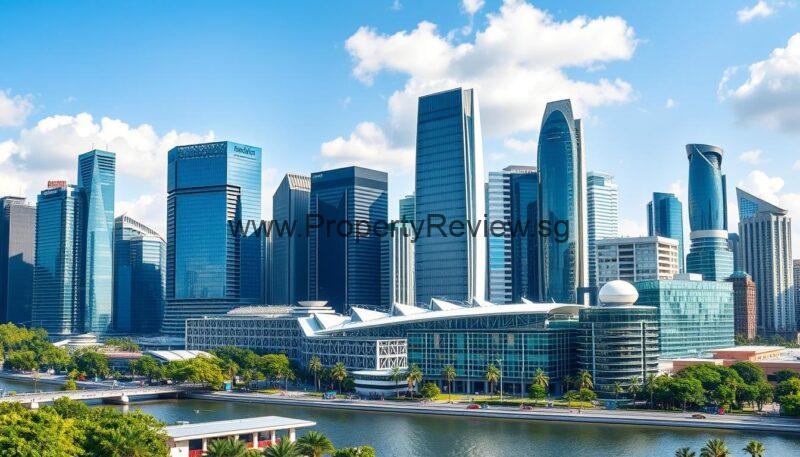
The industrial property market in Singapore is doing well. Rental rates for top industrial spaces went up by 2.0% in Q1 2024. The government’s support for mixed-use projects and the retail sector’s comeback are helping.
Singapore’s commercial real estate sector shows the city’s strong business appeal. It attracts both local and international developers and investors. They see the growing need for commercial space.
Government Policies and Regulations
The Singapore government has a big impact on the property market. They use policies to keep the market stable and homes affordable for locals. For example, they have a 20% tax on foreign buyers of homes.
They also have rules to stop too much speculation. These include loan limits and a tax on sellers.
Property taxes in Singapore depend on how much you own. If you live in your home, taxes range from 0% to 16%. The government has made changes to help with housing costs.
They are adding more homes and planning to build 23,000 public flats in 2023. This is part of their effort to keep the market stable.
The Singapore Property Regulations and Housing Policies are key to the market’s growth. They help keep the market balanced and attractive to investors.

Foreign Investment in Singapore Real Estate
Singapore is still a top choice for foreign real estate investment, even with a 60% Additional Buyer’s Stamp Duty (ABSD) for foreigners. The city’s role as a business center, stable politics, and key location in Southeast Asia attract many investors. But, there are rules on buying HDB flats and landed properties for foreigners.
In the first nine months of 2024, foreigners bought 5.3% of non-landed private homes in the Core Central Region. This is down from 10.4% in 2023, showing the cooling measures’ effect. In 2023, 3,400 high-net-worth individuals moved to Singapore. This brought the total number of millionaires to 244,800, with 336 centi-millionaires and 30 billionaires.
Also, the number of single-family offices in Singapore grew from 400 in 2020 to 1,400 by the end of 2023. This shows Singapore’s growing appeal to foreign investors.
Despite the hurdles, Singapore’s appeal for foreign investment in real estate remains strong. Its solid economy, stable politics, and strategic location make it a magnet for investors. As the market changes, smart investors will need to understand the rules and find the right opportunities.
Sustainability and Green Buildings
Sustainability and green building practices are becoming more important in Singapore’s real estate. Many new buildings have eco-friendly features like energy-saving systems and green roofs. These properties often sell for more and attract buyers who care about the environment.
The government is working hard to make Singapore greener. They have set goals to increase green spaces, reduce waste, and use more solar energy. They also want to support green finance and plan for rising sea levels.
Building analytics software, like CIM’s PEAK Platform, helps make buildings more energy-efficient. It checks how well equipment works, finds problems, and improves building systems. This leads to big energy and emissions cuts. Since buildings are a big source of emissions, making them sustainable is key.
Singapore is serious about being green. For example, the Oasia Hotel Downtown has a lot of green space, bringing nature into the city. Other projects, like Gardens by the Bay and Jewel Changi Airport, show off green design and energy-saving ideas.
The Kampung Admiralty and Khoo Teck Puat Hospital also show how to mix nature with city planning. They are great examples of sustainable urban design.
Technology’s Role in the Property Market
The Singapore property market is changing fast, thanks to PropTech. New technologies are making real estate transactions, property management, and customer experiences better. Virtual reality tours and AI chatbots are now part of the sales process, meeting buyer needs.
Smart home technologies are also becoming common in new buildings. They offer better security, save energy, and make life easier for homeowners.
PropTech in Singapore is growing because of data analytics and predictive tech. These tools give valuable insights and lower investment risks. Startups and traditional real estate firms are working together with government agencies to drive innovation.
This makes the property market more focused on data and customers. Technologies like AI and blockchain are expected to make things even smoother and safer.
However, there are challenges like data privacy concerns. But, the regulatory environment in Singapore supports new tech. The rise of PropTech startups and more money for real estate tech shows the industry’s commitment to using technology.
Challenges Facing Buyers and Investors
The Singapore property market is changing, bringing challenges for buyers and investors. Affordability is a big issue, especially in prime areas where prices are high. The 6.8% growth in private home prices in 2023 makes it tough for some to buy.
Market ups and downs, due to global economic issues and policy changes, add risk. In 2023, private home sales fell by 12.5% from the year before. The rules and restrictions on foreign ownership can also be overwhelming.
High ABSD rates affect investment plans, especially for foreign buyers and those with multiple properties. In 2023, sales to non-permanent resident buyers fell to 3.3% from 4.3% the year before. Meanwhile, Singaporean buyers’ share rose to 80.3%.
Despite these hurdles, the market still draws interest. Over 12,000 new units are set to hit the market in 2024. A 3–5% price growth is forecast for 2024, offering chances for buyers and investors to find their footing.
Future Outlook for the Singapore Property Market
The future of Singapore’s property market looks cautiously optimistic. Prices are expected to keep rising, with luxury and well-located properties leading the way. The demand might slow down in some areas, but the executive condominium (EC) segment is a bright spot.
It attracts middle-income buyers who can’t afford private homes but are not eligible for BTO flats. Long-term, areas with new infrastructure and urban renewal projects hold promise. Singapore’s real estate is set for stable growth, thanks to its strong economy and role as a global financial hub.
Community development is key, with integrated townships and mixed-use developments becoming more popular. Despite cooling measures and global economic worries, the market is expected to stay strong. The DBS Research team predicts a “calming down” of prices in 2025, not a drop in 2024.
However, buyers should be careful and set realistic budgets. Tools like the DBS Repayment Calculator and In-Principle Approval can help navigate the market.


