Table of Contents
The world of real estate is always changing, and Singapore’s market is no exception. A recent Bloomberg Intelligence report predicts a 3% rise in home prices in 2025. This growth is due to falling interest rates, strong demand, and healthy finances among households.
However, experts warn that several factors might slow down the market. These include buyers being picky, economic uncertainty, new properties coming on the market, and unsold homes. Despite this, the mood is still cautiously hopeful. The market is carefully watching how supply, demand, and the economy interact.
Key Takeaways
- Singapore’s property prices are forecasted to increase by 3% in 2025, driven by factors like falling interest rates and healthy household finances.
- Selective buyer behavior, macroeconomic uncertainty, new property launches, and unsold inventory may limit further price growth.
- The Singapore real estate market remains cautiously optimistic, with various factors influencing the overall trajectory.
- Investors and homebuyers should closely monitor market trends and government policies to make informed decisions.
- The ongoing balance between supply, demand, and economic conditions will play a crucial role in shaping the future of Singapore’s property landscape.
Current Trends in the Singapore Property Market
Singapore’s property prices have seen ups and downs in recent years. The average price of an HDB flat is $597,297, or $582.04 per square foot. Condominium units average $1,945,523, or $1,880.78 per square foot. The market dipped slightly in the third quarter of 2024, but many factors are still shaping the investment scene.
Changes in interest rates, economic policies, and a shift from public to private housing are key. The median price per square foot for private homes has seen small increases. Marine Parade is the only area with a 4.9% increase.
The demand for properties in the Outside Central Region (OCR) is growing. This area has a higher supply/demand index than central regions. People are looking for more affordable housing near MRT stations.
The core central region (CCR) has seen little price growth. Prices might drop further due to high supply and cooling measures. Rental rates are softening, giving tenants more power to negotiate.
The number of new units for 2024 is expected to be between 8,000 and over 11,000. This is a big increase from the 7,500 units in 2023.
Economic Indicators Influencing Property Prices
Singapore’s property market is closely tied to the country’s economy. Indicators like GDP growth, employment, and household income are key. They shape housing demand and prices in the Singapore Property Market and Singapore Housing Market.
While GDP growth projections are not given, the report says healthy household finances and possible interest rate cuts could boost demand. This is good news for the housing market.
Inflation-hedging power is also a factor in property demand. It shows worries about rising prices in the economy. Government measures and rules on foreign ownership help keep the market stable and affordable.
Singapore’s real estate is diverse, with HDB resale, private condos, and landed properties. This diversity shows the many economic factors at play in the sector.
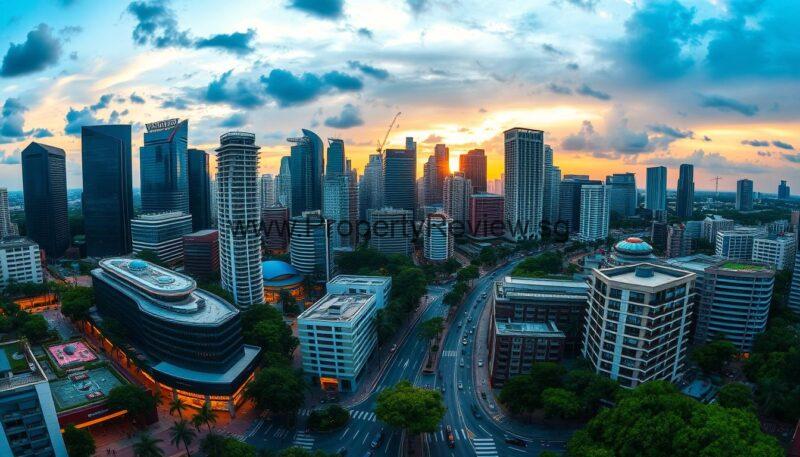
The report says economic indicators like employment, interest rates, and government policies will shape property prices. Watching these factors closely is important for the industry and policymakers. It helps them understand and manage the changing Singapore housing market.
Government Policies and Regulations
The Singapore government is key in shaping the property market. It uses policies and regulations to keep the market stable and sustainable. Over 80% of the population lives in public housing, showing the government’s focus on affordable housing.
Initiatives like the Additional Buyers Stamp Duty (ABSD) and the Total Debt Servicing Ratio (TDSR) aim to stop speculative buying. The ABSD, introduced in 2011 and increased in 2023, helps control price growth. The TDSR, since 2013, limits how much of your income can go to mortgage payments, encouraging smart borrowing.
The government controls land supply through the Government Land Sales (GLS) program. It also focuses on sustainable urban planning. These efforts ensure balanced development, meeting both residential and commercial needs while keeping the market stable.
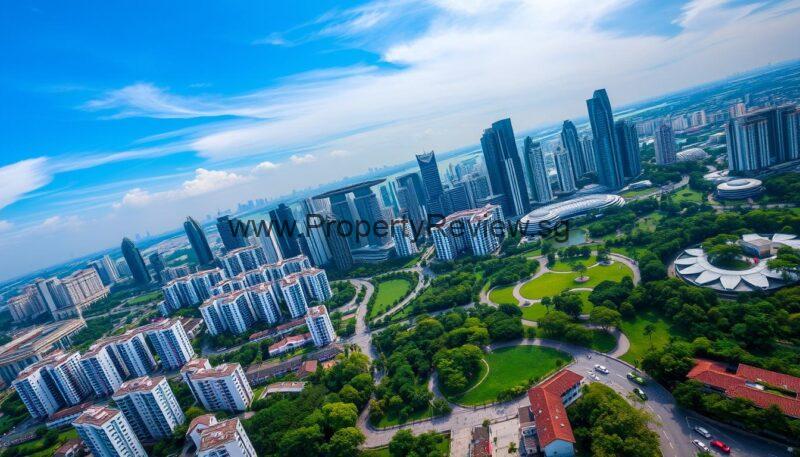
Experts predict the government will keep making policies for a healthy market. This might include supporting energy-efficient designs and adjusting taxes. The goal is to balance growth with societal needs, shaping the future of Singapore’s property market.
The Role of Foreign Investment
Singapore’s property market draws in foreign investors. They are drawn by the country’s stability, infrastructure, and business environment. Since 1965, foreign direct investment in Singapore has been steady, with real estate making up 3.1% of the economy in 2023.
Foreign buyers, including permanent residents, have bought over 20% of private properties since 2012. However, this number fell to 321 condos sold to foreigners from May 2023 to April 2024. This drop is likely due to the 60% Additional Buyer’s Stamp Duty (ABSD) for foreign buyers. Still, Singapore is a top choice for international property investors, especially from China, Malaysia, India, the United States, and Indonesia.
Foreign investment has greatly influenced Singapore’s property market. It has driven up prices, especially in luxury segments. Private non-landed residential properties have seen a 26.95% price increase since 2020. Landed properties have seen a 40.18% increase, fueled by foreign demand. Foreign investors often target premium properties in prime districts, leading to higher prices.
The Singapore government has taken steps to keep the market stable. They have introduced the ABSD and tightened the Total Debt Servicing Ratio (TDSR) from 60% to 55%. They also have the Seller’s Stamp Duty (SSD) for properties sold within three years, with rates from 4% to 12%.
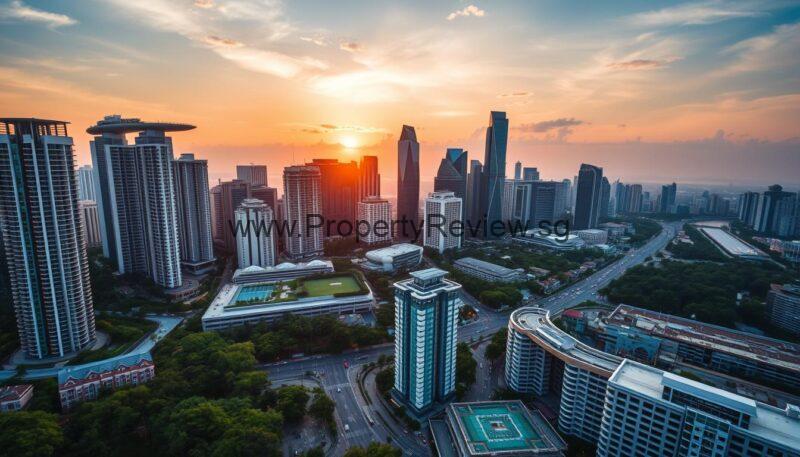
The role of foreign investment is key in shaping Singapore’s property market. The government’s measures aim to keep the market stable. Yet, Singapore’s strong economy and regulatory environment make it a top choice for real estate investors worldwide.
Popular Neighborhoods Driving Price Growth
Singapore’s population is growing fast, leading to high demand for housing. Most people live in public housing (HDB flats), but condos and landed properties are also in demand. This shows different areas have different price growth potential.
Punggol is becoming popular for its waterfront views and green spaces. It attracts families and young professionals. Woodlands is also gaining appeal with better access to the city center, thanks to new infrastructure.
Geylang is now a vibrant area with new developments and better transport links. It’s attracting young buyers looking for affordable homes near the city. Government policies aim to control the market and ensure growth is sustainable.
District 7 has seen a huge 97.3% increase in property prices over 10 years. Districts 18 and 14 have also seen big growth, with rates of 92.8% and 90.4%. Other areas like 26, 17, and 25 have seen price increases of 79.3% to 82.15%.
The property market in Singapore is changing. Mixed-use developments, green buildings, and leasing options are becoming more popular. This suggests that some areas will see even more price growth in condos and landed properties.
The Luxury Property Segment
Singapore’s luxury property market is strong, drawing in both local and international wealthy buyers. Despite global economic issues, the luxury housing market in Singapore keeps growing. This is thanks to limited supply, stable economy, and rising Asian wealth.
Euromonitor International says Singapore is among the top 10 countries for millionaires in 2020-2021. The limited prime properties make luxury homes in good locations very appealing to investors.
The rise in Asian wealth, especially among the very rich, boosts demand for luxury homes in Singapore. The city’s status as a top place for East Asia expats also makes it attractive for luxury real estate investments.
The Singapore government has put in place measures like the Additional Buyer’s Stamp Duty (ABSD) and Seller’s Stamp Duty (SSD) to slow down speculation. Yet, the luxury housing market stays strong. This is due to economic stability, limited supply, and interest from international buyers.
As the world recovers from the pandemic, Singapore’s luxury property market is expected to keep growing. There’s a strong demand for high-end homes that offer quality living, sustainability, and good investment potential.
Sustainability and Green Buildings
Singapore’s real estate is moving towards a greener future. The city aims to make 80% of its buildings sustainable by 2030. This shows the government’s strong commitment to the environment.
Green buildings in Singapore use less energy. This is important because energy use is a big part of the country’s emissions. Buildings like the Oasia Hotel Downtown and the Gardens by the Bay are leading the way in sustainability.
The Singapore Green Plan 2030 has big goals for the environment. It wants to grow more green spaces and parks. It also aims to make buildings more energy-efficient.
Changes in rules, like the Singapore Green Building Masterplan, are pushing for net-zero carbon buildings by 2030. This will make the property and real estate sectors more sustainable.
Technological Innovations in Real Estate
Singapore’s property sector is changing fast, thanks to new tech. This change is helping Singapore Property Agents and Developers work better. The city’s Proptech scene and government support are making real estate more efficient, open, and green.
Data analytics and predictive tech give investors key insights. They can now understand market trends and property values better. Drones, AI, and IoT sensors make managing assets easier, from inspections to facilities work.
Virtual reality is changing how we see properties. It lets people explore homes online. Blockchain is making real estate deals safer and more transparent.
Singapore’s property experts are getting on board with these new tools. Companies like GuocoLand are using digital solutions to improve their work. As tech keeps advancing, we can expect even better services and practices in Singapore’s real estate.
Predictions for 2025 and Beyond
Bloomberg Intelligence predicts a 3% rise in Singapore property prices by 2025. This is due to falling interest rates and strong demand from homebuyers. Yet, unsold homes, more launches, and economic uncertainty might slow this growth.
A 2018 DBS bank report suggests private home prices could hit $2,900 per square foot by 2030. This shows the market’s potential for growth, thanks to limited land and economic growth.
The rental market in Singapore might also see higher demand and prices. But, rising interest rates, more supply, and global economic issues could slow this growth. The market’s future will balance supply, demand, and economic trends.