Table of Contents
When it comes to property acquisition, location was formerly a deciding factor. Convenience must also be chanted in tandem with location.
Recently, we’ve observed an increase in the number of public facilities being integrated together, including a library, swimming pool, hawker center and other food and retail establishments under one roof.
Aside from the fact that this would maximize land use, it will also make life easier for the people. Heartbeat@Bedok, Our Tampines Hub, and Kampung Admiralty are examples of interconnected hubs.
Creating a structure that can be used for both residential and business purposes is not a new concept. The term “mixed-use” has been used to describe these kinds of projects. The term “Integrated Development” was used to describe how mixed-use complexes have grown into Integrated Developments in the previous decade or so.
The term “Mixed-use and Integrated Developments” is defined in this article.
What Exactly Are Mixed-Use Development?

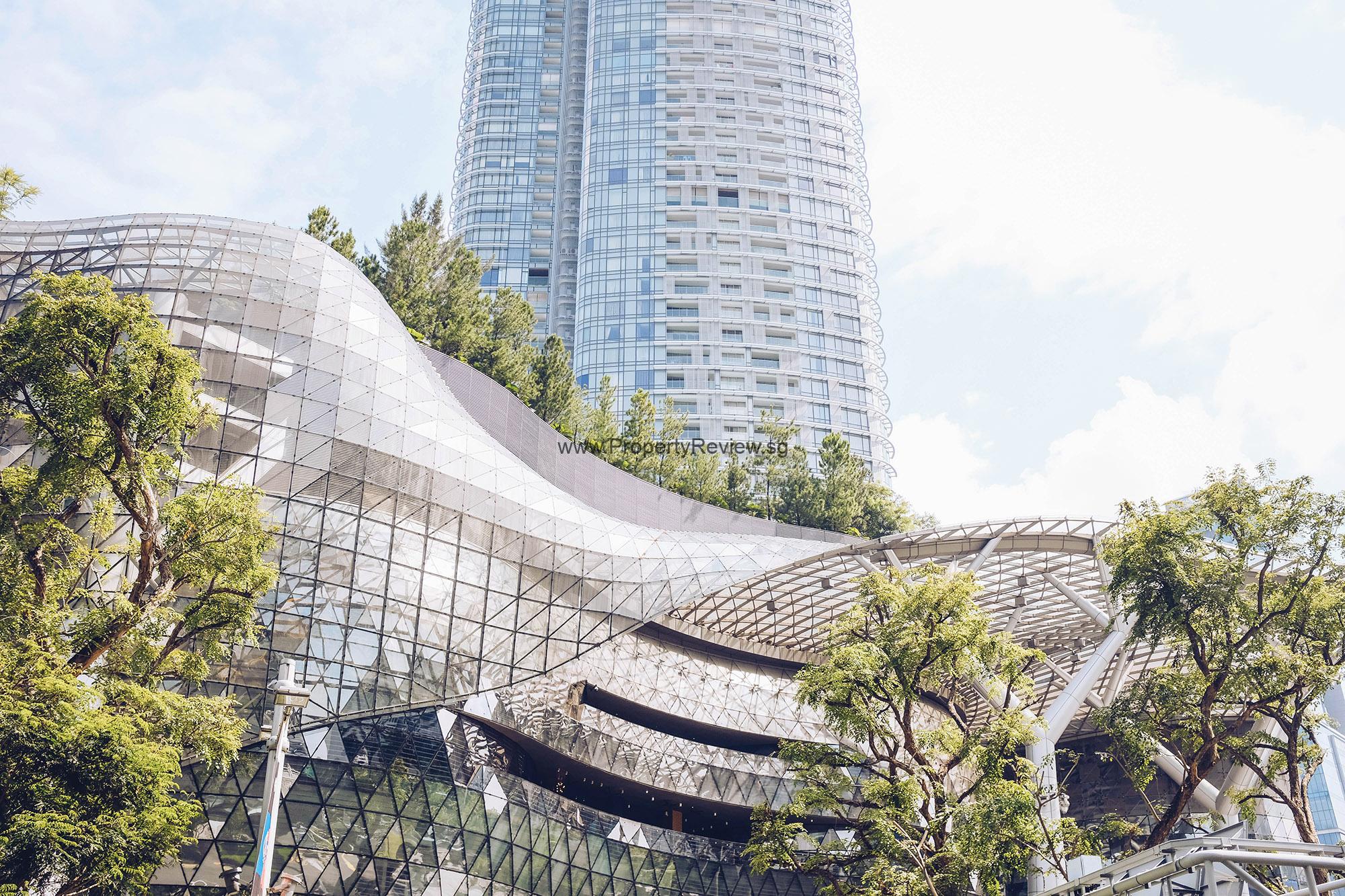
Residential and commercial space may be combined in one structure or in a cluster as part of an urban development plan aimed at improving our quality of life. The residential tower is usually located on top of the building’s commercial platform.
On property classified for commercial and residential purposes, URA standards provide that mixed business and residential projects may be built.
A minimum of 60% of the gross floor area (GFA) shall be devoted to housing, with a maximum of 40% of the GFA reserved for commercial use in projects situated in a Commercial & Residential zone. On the other hand, for projects erected in commercial zones, at least 60% of GFA must be commercial, and the non-commercial (i.e., residential) use must be chosen by the competent authority.
Based on the commercial podium’s ownership, mixed-use complexes may be further divided. It is possible for the business apartments to be owned and maintained by a single owner, often the developer, or sold as strata units.
According to a general rule of thumb, developers who are well-known and well-respected are more likely to attract a diverse mix of established anchor tenants and up-and-comers to the retail mall. Rental returns are more important to these strata unit owners than finding the correct mix of renters, since they must find their own tenants.
What is an Integrated Development?
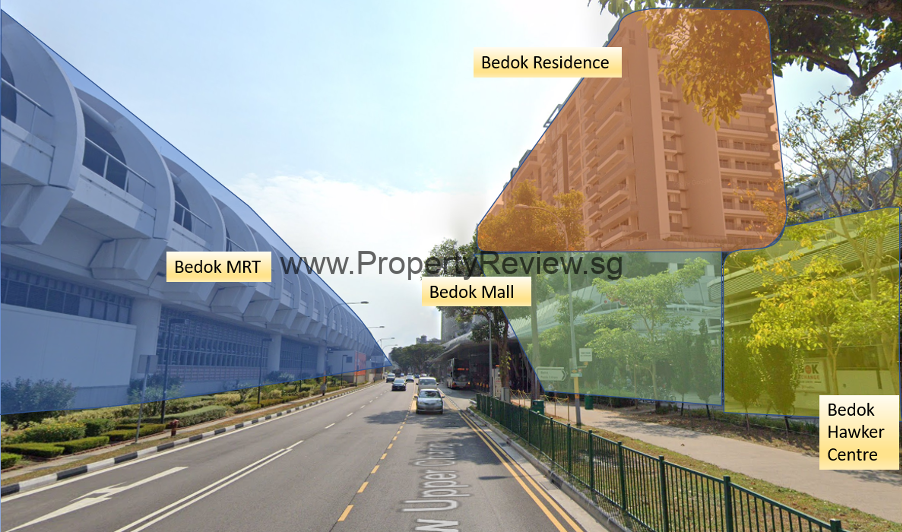
Last but not least are integrated developments, which have seen a recent surge in popularity as an alternative to traditional mixed-use projects. Additionally, Integrated projects have direct access to public facilities, such as Bus interchanges or MRT stations, as well as other amenities, such as shopping malls and community clubs, within a short distance of one another.
To illustrate this point, we’ve included the Bedok Residences and Shopping Mall Integrated Development in our list of examples.
The commercial pedestal is Bedok Mall, while the residential tower is Bedok Residence. The project comprises of both. The Bedok Bus Interchange and the Bedok MRT Stations are both subterranean passageways connecting to the complex. Bedok Hawker Centre is located nearby, as are other public facilities, such as a public library.
Integrated Developments’ Allure
Because of the enhanced convenience these integrated development projects provide, they have been widely sought after by consumers. According to a research by OrangeTee & Tie in 2018, purchasers are ready to pay a premium of 7 percent to 19 percent because of the limited quantity of available units in these developments.
Only over 3% of Singapore’s total non-landed residential stock is now available, which amounts to little under 9,000 units.
The current list of Integrated Developments (ID) has been compiled, and here are some noteworthy findings:
| # | Project | MRT Station | Bus Interchange | Shopping Mall | TOP |
|---|---|---|---|---|---|
| 1 | Compass Height | Sengkang | Yes | Compass One | 2002 |
| 2 | The Centris | Boon Lay | Yes | Jurong Point | 2009 |
| 3 | Orchard Residences | Orchard | No | Orchard ION | 2010 |
| 4 | Bedok Residences | Bedok | Yes | Bedok Mall | 2015 |
| 5 | South Beach Residences | Esplanade, City Hall | No | South Beach Avenue | 2016 |
| 6 | Wallich Residence | Tanjong Pagar | No | Guoco Tower | 2017 |
| 7 | DUO Residences | Bugis | No | Duo Galleria | 2017 |
| 8 | Marina One | Marina Bay, Shenton Way, Downtown | No | The Heart | 2017 |
| 9 | Watertown | Punggol | Yes | Watertown Point | 2017 |
| 10 | Hillion Residences | Bukit Panjang | Yes | Hillion Mall | 2017 |
| 11 | North Park Residences | Yishun | Yes | North Point | 2018 |
| 12 | Poiz Residence | Potong Pasir | No | Poiz Centre | 2018 |
| 13 | Park Place Residences | Paya Lebar | Yes | Paya Lebar Quarter | 2020 |
| 14 | The Woodleigh Residences | Woodleigh | Yes | The Woodleigh Mall | 2022 |
| 15 | Sengkang Grand Residences | Buangkok | Yes | Sengkang Grand Mall | 2023 |
| 16 | Sceneca Residence | Tanah Merah | No | Sceneca Square | 2025 |
| 17 | Pasir Ris 8 | Pasir Ris | Yes | Pasir Ris Mall | 2026 |
Unmatched Convenience from Mixed-Use and Integrated Developments
A project’s location and the ease with which it may be accessed in the neighborhood are the most important selling points for any integrated development. Several significant transportation hubs, including MRT stations and bus interchanges, are within easy walking distance of these developments’ tenants.
These malls are normally owned and managed by the developer and have a net lettable space of more than 100,000 square feet, making them ideal for integrated developments. Therefore, malls often have a variety of tenants, including supermarkets and food courts, as well as F&B establishments and medical clinics.
WFH (work from home) procedures have been mandated by the current COVID epidemic, and we expect that these practices will continue to be accepted and used even beyond the circuit breaker time. There are mixed-use projects that allow employees such as these to live and work in the same area.
Enjoy more Savings
In the next 10 years, the Sustainable Singapore plan calls for a “car-lite” Singapore. Residents in these developments will be less dependent on private automobiles for their daily commute thanks to the connection provided by Integrated Developments.
Over the course of a decade, automobile ownership might save you at least $100,000 – $150,000. This covers the cost of your automobile loan, parking, ERP, insurance, road tax, and general vehicle upkeep, as well as any “fines.”
You may also save money and time by not having to wait and take a feeder service since integrated projects are usually linked to either an MRT station or a bus interchange.
We’ve been hearing a lot about how meal delivery services are raising their prices. A food court or other F&B establishments just outside your door would eliminate the need for food delivery services and allow you to pick up your meal in a matter of minutes, saving you money on food delivery.
A “Safer” Investment
Potential homebuyers, investors, and tenants would find a mixed-use property in a desirable location with great retail management enticing. In terms of both sales and rents, these developments would be more popular. Such a high level of interest in a property maintains it more marketable for buyers, while also allowing owners to charge higher rents to interested renters.
As the population grows and becomes more wealthy, the demand for Integrated projects will certainly rise because to the limited stock currently available on the market. Compared to comparable single-use residential leasehold developments of the same age, the value of these properties tends to retain better.
As a result, amid a downturn in the real estate market, the premium these developments attract will keep prices from plummeting as much as projects with less transit connectivity or no distinct selling factor may.
Disadvantages of Integrated and Mixed-Use Projects
Lack of Exclusivity
Ironically, mixed-use complexes’ worst drawback is related to their strongest asset. A well-connected project and a well-received shopping mall will reduce the feeling of exclusivity for those who live above, since they will be forced to pass through a big throng every time they return home.
Residents who want to drive would face high traffic around the area during peak times. In addition, the homeowner would have to stand in line with other guests to access the parking lot since there may be only one entry.
Nuisance from Noise and Smell
More noise and odor may be a problem in larger shopping malls. Residents of an integrated community would often gather in the mall to fulfill their daily need of shopping and recreation in a well-connected development. Loudspeaker advertisements by mall tenants to draw in customers might resound across the nearby residential buildings.
Some noise and exhaust fumes will be generated by the integrated projects near bus interchanges and MRT stations.
Finally, there will be an increase in food waste as a result of the proliferation of food and beverage establishments. The project’s trash collecting system may possibly be to blame for the unpleasant odors. Residents on the upper floors may be bothered by an offensive odor if the project makes use of a pneumatic waste collection system.
Shortfalls in parking might occur.
Compared to developments in the OCR, projects in the CCR and RCR may have a parking lot ratio of 1: 0.8. As a result, there may be a lower number of parking spaces available for residents in mixed-use complexes in the Central Core Regions and the rest of the Central Region. Residents with a large number of vehicles, as well as guests of those residents, would be forced to fight for parking spaces intended for mall patrons.
Mixed-use and Integrated Developments are designed to meet the needs of people from all walks of life.
There will always be both advantages and disadvantages to every new technology. Buyers benefit from the ease of being able to work, play, and live in the same place thanks to these mixed-use complexes.
You may use Integrated Development for personal use or invest in it since it has so many benefits. Properties with strong connections and a convenient locations are in high demand as the population in the surrounding area rises in a land-limited nation like Singapore.