

Table of Contents
Singapore’s real estate scene is set for a big change in 2025. The Housing and Development Board (HDB) plans to launch many new projects. These will include 100,000 new flats by 2025, starting with a big sale in February.
In early 2025, HDB will introduce about 5,000 Build-To-Order (BTO) flats. These will be in areas like Kallang/Whampoa and Queenstown. Also, over 5,500 flats will be available through the Sale of Balance Flats (SBF) exercise. This means more than 10,000 flats will be up for grabs for homebuyers.
Key Takeaways:
- HDB to launch around 5,000 BTO flats in popular neighborhoods like Kallang/Whampoa, Queenstown, Woodlands, and Yishun in February 2025.
- The upcoming SBF exercise will offer over 5,500 flats, resulting in a combined total of more than 10,000 new units.
- HDB remains on track to deliver 100,000 new flats from 2021 to 2025, with 17,300 planned for 2025.
- Buyers must have a valid HDB Flat Eligibility (HFE) letter when applying for these upcoming flat sales.
- The February 2025 launch promises a diverse range of flat types, catering to a wide spectrum of homebuyers.
Overview of Singapore’s HDB Landscape
The Housing and Development Board (HDB) is key in Singapore’s housing market. It has over 1 million flats across 24 towns and 3 estates. This makes homes affordable and accessible for most Singaporeans.
The HDB Resale Price Index (RPI) for the third quarter of 2024 rose by 2.7% from the last quarter. This increase is due to high demand and a tight supply in the market.
The HDB offers different housing options. First-time buyers can get subsidized new flats. There are also grants of up to $120,000 for new flats and $230,000 for resale ones.
Singles aged 35 and above can get grants of up to $60,000 for new flats. For 5-room or smaller resale flats, the grant is up to $115,000. The government keeps a close eye on the market. It adjusts policies to ensure stability and sustainability.
The HDB has grown, with more flat types and designs. Neighborhoods have 4,000 to 6,000 flats, with town centers offering amenities. The HDB works to improve living, promote sustainability, and meet diverse needs.
Key Upcoming HDB Projects
Singapore’s real estate is changing fast. The HDB projects for 2025 are exciting for those who love Singapore Condos and Property Prices. Five big projects will start in February 2025, offering different homes all over the city.
The Tanjong Rhu project will have 800 units and is in the Prime category. It will give residents amazing views of the Geylang River and the Singapore Sports Hub. Mei Chin Road in Queenstown will have 1,110 units. The Woodlands project will have 1,540 units, with some homes near the sea.
In Yishun, two projects at Chencharu will offer 1,510 units. These projects show the government’s effort to make housing affordable and varied. This ensures Singapore Condos and Property Prices are within reach for everyone.
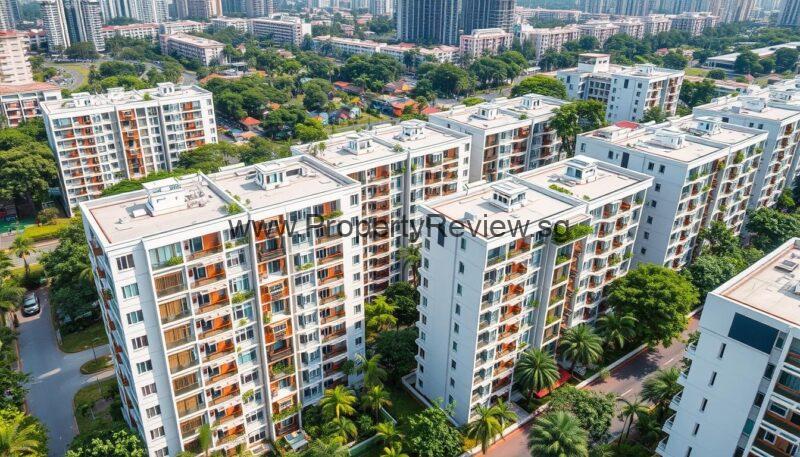
These HDB projects are crucial for Singapore’s future. They will help shape the property scene, offering homes in vibrant areas. These developments focus on sustainability, community, and easy access. They aim to improve life for Singaporeans everywhere.
Major Developments in Central Region
Singapore’s central region is getting ready for exciting property projects. The Queenstown project in Mei Chin Road will have 1,110 flats. These flats are just a 10-minute walk from Queenstown MRT station. This makes it a prime location, possibly classified as Plus or Prime by HDB.
The Kallang/Whampoa project in Tanjong Rhu is another highlight. It will have about 800 units of flats. Residents will have easy access to Dunman High School and MRT stations. This makes it great for families and professionals looking for rentals.
The Greater Southern Waterfront (GSW) initiative is also transforming the area. It aims to increase property values in Marina South and Harbourfront. The Thomson-East Coast Line has made these areas more accessible, attracting developers and investors.
Chinatown in District 2 is another area with unique investment chances. The Maxwell MRT station on the Thomson-East Coast Line has made it more appealing. It’s now a top choice for buyers and renters.
The central region’s mix of homes, businesses, and culture is drawing more renters and developers. This diversity ensures the area will keep growing and attracting people in the future.
Exciting Projects in the East
The Singapore property market is always changing, and the east is leading the way. New projects focus on better connections, green living, and community areas. These plans aim to change the city’s look and feel.
The Cross Island Line is a big project. It will add five new MRT stations by 2029. This will make it easier to get around the east. The Thomson-East Coast Line, set to finish by 2024, will also link the east to the rest of Singapore.
Green living is a big deal too. The Tampines Cycling Paths will grow to 21km by 2022. This supports eco-friendly travel. The Paya Lebar Airbase move from 2030 will also bring new land for homes and businesses.

The East Region will get more community spaces. There will be rain gardens, lookout decks, a waterfront path, and a garden bridge along Sungei Tampines. A new mixed-use development is planned for Pasir Ris Town Centre. It will have homes, shops, and places to have fun.
These projects will make the eastern part of Singapore more lively and welcoming. They will meet the needs of the people living there. And they will help the property market grow.
Western Singapore: What’s Coming Up?
The western part of Singapore is getting ready for some big changes. A major project is a 1,540-unit development in Woodlands. It will have different types of homes, from small to large. It’s near parks and a new MRT station, set to open in 2026.
Western Singapore is also seeing more HDB projects. There are 60 new launches in 2025. These homes range from 2 to 5 bedrooms, priced from $1.892 million to $6.106 million. Buyers can get discounts of up to 7% on some units.
But it’s not just homes. The government plans to make Jurong Lake District a lively area for work and living. Pasir Panjang Power District will also be redeveloped. It will have homes, hotels, parks, and more. These plans will change the housing market in Singapore.
Integrating Sustainability in HDB Designs
Singapore is making big changes in its public housing. The HDB Green Town Program is a 10-year plan to cut energy use by 15 percent by 2030. This goal is pushing for new ideas in the Singapore Property Investment and Singapore Condos markets.
The focus is on using more solar energy. The HDB wants to make 540 megawatt-peak (MWp) of solar power by 2030. This could mean 648-gigawatt hours (GWh) of clean energy every year. So far, 2,700 out of 8,400 HDB blocks have solar panels, showing the government’s dedication to green energy.
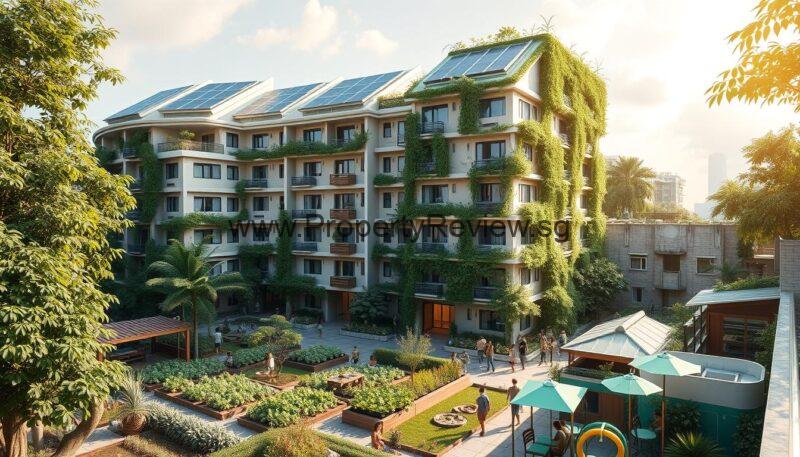
HDB is also looking into other green ideas. For example, smart LED lighting in common areas could cut energy use by up to 60 percent. The urban water harvesting system (UWHS) in HDB areas also cuts down on water use for cleaning common areas by 50 percent. This shows a complete approach to saving resources.
HDB is also working on cooling solutions. They aim to lower the temperature in living areas by 2 degrees Celsius. This is through cool coatings on buildings and infrastructure. These efforts, along with creating more car-free spaces, show HDB’s dedication to sustainable living.
Singapore is at the forefront of sustainable urban development. The inclusion of these green features in HDB designs will improve life for residents. It will also help meet the country’s sustainability goals.
Affordable Housing Initiatives
The Housing and Development Board (HDB) in Singapore is working hard to make homes affordable. In October 2024, they introduced new flat categories called Prime and Plus. These categories have stricter rules to keep homes affordable and prevent high profits.
Prime and Plus flats must be occupied for 10 years before they can be sold. The government also takes back 6-9% of the initial investment. This helps keep HDB flats within reach for more people, supporting the goal of home ownership.
The HDB has made huge strides in providing homes. They started with 20,907 flats in 1960 and now have over 1 million units. This shows their big role in solving Singapore’s housing needs.
Property prices in Singapore are still pretty good. One-bedroom flats cost between $95,000 and $234,000. Four-bedroom flats range from $372,000 to $525,000. The government’s efforts keep these prices low, helping many Singaporeans buy their first home.
Property agents in Singapore are very important. They help buyers find the right HDB flat. With their local market knowledge, they make sure buyers get a home that fits their budget and needs.
Engaging Community Spaces
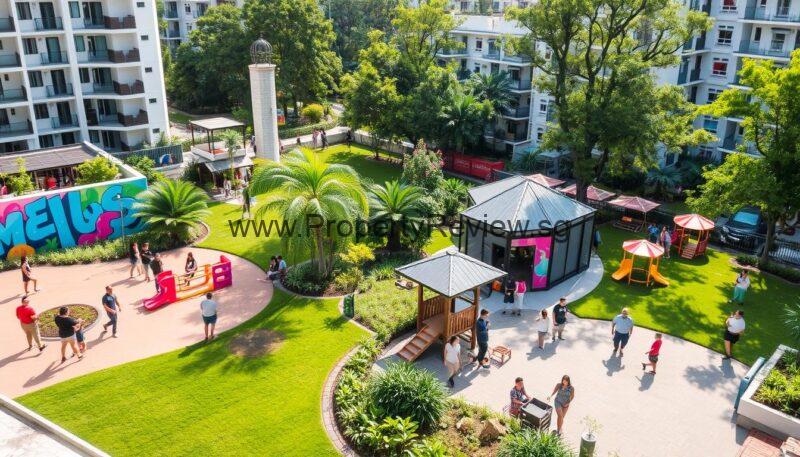
Singapore’s property and real estate scene is changing. New HDB projects focus on vibrant community spaces. These spaces aim to boost social interaction, encourage fun activities, and improve residents’ well-being.
In Yishun, the Chencharu projects will have a supermarket, pre-school, and a residents’ network centre. This will be a community hub. The Woodlands project is near Admiralty Park and Woodlands Waterfront Park. It offers easy access to green spaces and fun facilities.
Singapore’s real estate sector is focusing on sustainable and accessible community spaces. The Tanjong Rhu project is near the Singapore Sports Hub. It lets residents enjoy sports and events, promoting community and health.
These community spaces show Singapore’s dedication to lively neighborhoods. They meet the needs of residents by combining homes with recreational areas. This aims to improve life quality and strengthen community bonds.
The Impact on Property Values
The Housing and Development Board (HDB) in Singapore is changing with new projects. This change affects property values. The resale market saw price and transaction increases in the third quarter of 2024.
Prices varied by town, with Prime and Plus category flats costing more. The government has taken steps to slow the market. They lowered the Loan-to-Value limit for HDB loans from 80% to 75%.
This move helps keep property investment sustainable and affordable. The average price per square foot for resale 4-room flats in October 2024 was $636. This is up from $423 in October 2014.
This rise shows growing demand in the property market. Median wages have increased from around $3,800 per month in 2013 to $5,200 in 2024. This growth drives the demand for properties.
Inflation rates for goods like utilities, food, and healthcare have been between 2.5% and 3% in recent years. Yet, the property market has shown strength. The top 5 most expensive new sales projects have prices from $3,430,000 to $6,249,000.
The cheapest new sales projects have prices from $988,000 to $1,345,000. This shows a range of prices in the market.
The impact of property values goes beyond new sales. The top 5 most expensive resale projects have prices from $4,750,000 to $9,000,000. The cheapest resale projects have prices from $615,000 to $782,000.
This variety in the market shows different affordability levels. It also highlights various investment opportunities for homebuyers.
Conclusion: What to Expect in 2025
The Singapore housing market is set for exciting changes. The Housing and Development Board (HDB) plans to launch about 100,000 new flats from 2021 to 2025. In 2025, they aim to introduce 17,300 flats. This move aims to balance affordability and quality, making homes more accessible to Singaporeans.
When choosing a home, buyers should think about location, amenities, and future plans. The Singapore housing market and Singapore property rentals are evolving. They focus more on sustainability, community living, and meeting different housing needs.
The relocation of the Paya Lebar Airbase by 2030 will open up land for about 150,000 new homes. The Southern Islands will also see eco-tourism projects. These include nature and heritage trails that promote sustainable living. As Singapore’s urban landscape changes, residents can expect vibrant living spaces that meet today’s needs.


