Table of Contents
The Singapore property market is set for big changes by 2025. Key trends are changing how people invest and buy homes. These changes come from new demographics, tech, and economic shifts.
Properties near MRT stations are in high demand. This is because of their affordability, bigger spaces, and easy access to parks and shops. The MRT network’s growth makes these areas more appealing.
Flexible home financing options, like floating-rate loans, are becoming more popular. This is because interest rates are expected to drop in 2024-2025. It helps buyers manage financial changes and take advantage of market shifts.
Mixed-use developments are making a comeback. For example, the Golden Mile Complex is being acquired. These projects combine homes, offices, and lifestyle spaces. They meet the changing needs of people and investors in Singapore.
The Core Central Region (CCR) is opening up new chances for local buyers. About 2,968 new homes are expected in 2024. This, along with a balanced supply, shows a more stable market.
The market is also focusing more on sustainability. There’s a push for eco-friendly tech and designs to cut down on carbon emissions. This move supports Singapore’s goal of being more environmentally friendly by 2025.
Key Takeaways
- Increased demand for properties near MRT stations due to improved commuting convenience
- Rising popularity of flexible home financing options, such as floating-rate loans
- Revival of mixed-use developments offering integrated residential, commercial, and lifestyle offerings
- New opportunities in the Core Central Region (CCR) with stabilizing supply
- Greater focus on sustainability in real estate, including eco-friendly technologies and designs
Urban Redevelopment Initiatives and Their Impact
Singapore’s urban landscape is changing fast. The city is working on many redevelopment projects. These efforts will likely change property prices and the housing market.
The Golden Mile Complex is getting a major makeover. It was bought for $700 million. This shows a focus on updating old buildings, which could bring new chances for investors and better living for people.
Other places like Orchard Towers and Sultan Plaza are also being revamped. These changes will likely affect property prices in those areas.
These projects are part of a bigger plan to improve the city. The Urban Redevelopment Authority (URA) is leading the way. They make sure these plans fit with Singapore’s goals for growth and sustainability.
As Singapore keeps growing, these redevelopment plans will shape the property market. Investors and buyers should watch these changes closely. They will help understand the new trends in Singapore’s housing market.
Sustainability and Eco-Friendly Developments
Sustainability is key in Singapore’s property market. Green buildings are sought after, drawing in eco-aware tenants and saving on costs. The government offers tax breaks for sustainable construction, boosting the appeal of green properties to investors.
LEED-certified and other green-certified buildings are becoming more popular. This shows a strong commitment to cutting carbon emissions and fostering sustainable urban living.
Global energy demand for buildings has grown by 4%, and CO2 emissions have increased by 5% since 2020. In Australia, 90% of CEOs in the property and construction sector worry about the lack of sustainable efforts. Yet, two-thirds of homebuyers prefer energy-efficient homes, showing a strong preference for sustainable properties.
The Singapore government plans to make 80% of buildings ‘green’ by 2030. This shift could create 7,000 new jobs in Australia by the same year. Singapore’s landed home design is moving towards sustainability, incorporating green technologies and materials.
Brand New Land, a top real estate developer in Singapore, prioritizes sustainable design in all projects. They aim to blend sustainable living with modern luxury, making eco-friendly homes appealing and practical. With the government’s support, Singapore’s real estate is set to become more energy-efficient and environmentally friendly.
Technology and Smart Homes Integration
The Singapore property market is changing fast. Artificial Intelligence (AI) and automation are making property management easier. They help find tenants and handle maintenance needs.
Smart home features are now common in new condos and landed properties. They boost security and save energy.
Blockchain technology is being looked at to speed up and secure real estate deals. These tech advancements give property investors and managers an edge in Singapore. The smart home appliances market in Singapore is expected to grow by 12.48% each year.
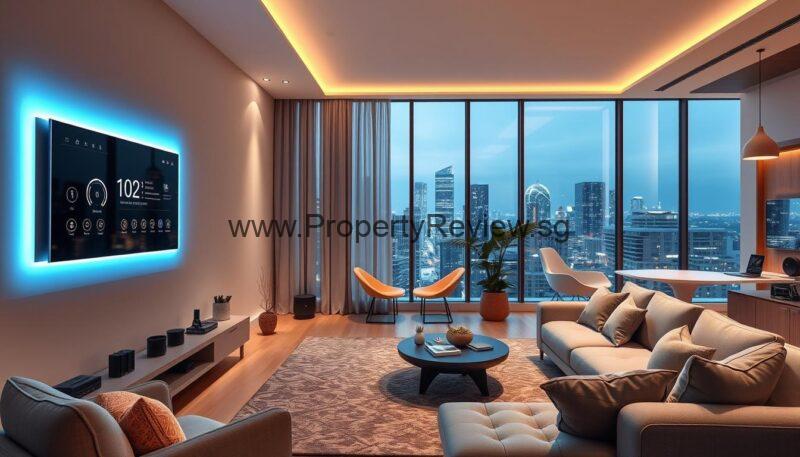
Singaporeans are loving smart home technology to make their homes better. The government supports this with programs like the HDB Smart Enabled Home and the Smart Nation Initiative. Over 80% of Singaporeans live in HDB flats, and the HDB Smart Hub was launched in 2016.
Smart home systems bring convenience, efficiency, and a better living experience. But, they also have risks like data breaches and device unreliability. Homeowners need to focus on security to keep their homes safe and private.
Demographic Shifts Influencing Demand
The Singapore housing market is changing a lot because of new trends in the population. With a record 6.04 million people, and more non-residents, there’s a big demand for homes. People want different things now, based on their age and lifestyle.
Young people in Singapore want homes that are close to city life and easy to move around in. Older folks are looking for places that are safe and easy to live in. This means there’s a big interest in small homes, shared living spaces, and places made for different age groups.
The number of non-residents in Singapore has grown a lot, up by 155% since 1999. This has made housing prices go up by 21% and private property prices by 7% in 2023. But, a new rule that makes it harder for foreigners to buy homes has helped slow things down. This has led to a drop in housing and rental prices in 2024.
Singapore is becoming a place where many people are older, with 18% of residents over 65 by 2024. The housing market is changing to meet their needs. With most people living in public housing, the city is planning better for older residents. This affects both homes and commercial spaces.
Changes in Foreign Investment Policies
Singapore’s real estate market is changing fast. The government has introduced new rules to affect how foreign investors buy property. The Additional Buyer’s Stamp Duty (ABSD) for foreigners is now 60%. This has made many overseas buyers think twice, leading to a big drop in their property sales.
Before the pandemic, foreign buyers made up over 20% of private property sales. Now, they’ve sold just 321 condo units in the last year. Despite these changes, Singapore is still a top choice for global investors. They look for stability and growth, which Singapore offers.
Prime areas like Orchard Road, Tanglin, and Bukit Timah are still popular. They’ve seen a 26.95% price rise in private homes since 2020. Landed properties have seen an even bigger jump, with prices up by 40.18%.
The government is also pushing for more eco-friendly homes. This move is expected to attract more foreign investment. Technology, like virtual tours and blockchain, is making it easier for international buyers to purchase property remotely.
The government is always adjusting its policies to keep the market stable. They’ve recently set up the Office of Significant Investments Review. This shows their commitment to balancing national security with the needs of global investors in the property investment Singapore market.
Rise of Co-Living Spaces in Urban Areas
Singapore’s real estate is changing fast. Co-living spaces are becoming more popular. They appeal to young professionals and students who want affordable, community-focused living.
Private home rentals in Singapore have jumped by nearly 30% in 2022. They’re expected to rise by 9% in 2023. This is the biggest increase in 15 years. The high cost of property makes co-living a good choice for many.
Co-living spaces offer fully furnished rooms and shared areas. They have amenities like cleaning services and co-working spaces. These places are especially liked by young people, with 85% of guests under 40.
The co-living trend is set to grow in Singapore. It’s affordable, flexible, and builds community. With only a small part of the housing stock in co-living, it’s shaping the future of property here.
The Evolving Commercial Property Landscape
Singapore’s commercial property market is changing fast. New trends are shaping how businesses work and investors plan. The rise of e-commerce has changed traditional retail spaces. Now, shopping centers must adapt to new consumer tastes.
Office spaces are also changing. They now focus on flexibility and teamwork. This helps boost productivity and employee happiness.
Mixed-use developments like Fortune Centre in Bras Basah Bugis are becoming popular. They mix commercial, cultural, and residential areas. This meets the varied needs of Singapore’s lively community.
Property agents in Singapore are key in this changing market. They offer important advice to buyers and sellers. This ensures investments match the market’s shifts. By keeping up with trends, agents help clients find new opportunities in commercial property.
Rental Market Dynamics and Trends
The rental market in Singapore is seeing big changes. There’s a growing need for both short-term and long-term rentals. Since the Covid-19 pandemic, property prices have skyrocketed, raising concerns about a housing bubble.
Rental rates for private homes stayed the same for about eight months in 2023. But, HDB rental rates jumped by 28.5% in 2022.
Tenant preferences are shifting, with a focus on flexibility and extra services. Build-to-rent (BTR) communities are gaining popularity. They offer long-term rentals with shared facilities. Rental yields in Singapore are still attractive, especially in areas with good transport links and amenities.
There are regional differences in the rental market. In 2024, the occupancy cap for bigger HDB flats and private homes was raised. Rental demand for HDB flats is expected to drop in 2024. The Rest of Central Region (RCR) saw the biggest rent hike of 0.9% in private housing. The Core Central Region (CCR) saw a 0.3% increase, while the Outside Central Region (OCR) saw a slight decrease.
The rental market in Singapore is still strong. It’s driven by the country’s appeal to expats and ongoing housing demand. Investing in property in Singapore remains a good choice, with the rental market offering chances for both short-term and long-term investors.
Impact of Education Hubs on Real Estate
Singapore aims to be a top education hub, changing its real estate. Properties near good schools and universities are in high demand. This is because investors and developers are focusing on the education sector.
The government wants to make Singapore a “Global Schoolhouse.” This has led to many education-focused projects and infrastructure. Both residential and commercial properties are seeing changes, with more student housing and spaces for education.
Initially, Singapore wanted 150,000 international students by 2015. But, it only got about 75,000 by 2014. This led to issues, like the University of New South Wales closing its Singapore branch.
Still, education hubs have a big impact on Singapore’s real estate. Properties near top schools and universities are still attracting investors. Developers are adding student housing and education amenities to their projects. As Singapore’s education reputation grows, the real estate market will see more demand and investment.
Government Policies and Housing Affordability
The Singapore housing market is shaped by the government’s policies. The Housing and Development Board (HDB) is key in making homes affordable. It has built over one million homes, housing 80% of the country’s people.
To help first-time buyers, the government offers grants and priority schemes. First-timer families can get up to $120,000 for new flats and $230,000 for resale ones. Singles aged 35 and up can get up to $60,000 for new flats and $115,000 for smaller resale flats. These help make buying a home in Singapore more possible.
The government has also introduced Plus model HDB flats near MRT stations. This has drawn a lot of interest from buyers. The launch of BTO flats with a shorter wait time of 2 to 3 years offers more choices for homebuyers.
As the market changes, the government’s policies will be vital. They will help keep homes affordable for Singaporeans.
The Shift Toward Hybrid Workspaces
Singapore’s commercial real estate is changing fast. Now, offices are designed for flexible work, with more focus on teamwork and shared desks. This change is seen in both new buildings and updates to old ones.
Work-from-home needs are also changing home buying. More people want homes that work for both work and life. Singapore’s property agents are seeing this as buyers look for homes that meet these needs.
The hybrid work model is clear in the commercial real estate market. Fewer people are in offices, leading to a drop in demand. This has caused a big drop in office space needs in the city center. Also, real estate investment trusts are seeing less money coming in and lower rental returns.
But, not all areas are feeling the same effects. Industrial and mixed-use office spaces are actually growing. This is thanks to plans to boost logistics, e-commerce, and tech sectors. It shows the market is changing.
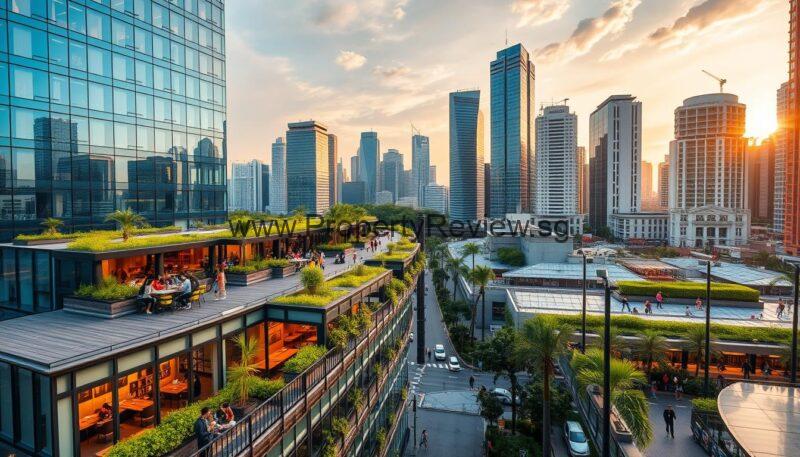
The real estate world in Singapore and other big cities is adjusting to new needs. The move to hybrid workspaces is changing the commercial property market. It brings both challenges and chances for agents and investors.
Economic Factors Driving Property Market Growth
Singapore’s property market is thriving thanks to several economic factors. Interest rate cuts in 2024-2025 are making home loans more appealing. This makes buying property easier for many.
Interest rates are stabilizing, which is great for investing in property. Borrowing money is now more affordable. This is good news for those looking to invest.
Global trends also impact Singapore’s real estate. The city is seen as a safe place for property investment Singapore. Strong economic growth and a growing population are driving up demand for homes.
This demand is pushing Singapore property prices higher, especially in sought-after areas. These economic factors are influencing both residential and commercial markets. They offer chances for investors, both local and foreign.
Singapore faces challenges due to its limited land. Yet, the mix of economic factors will continue to shape its real estate scene.