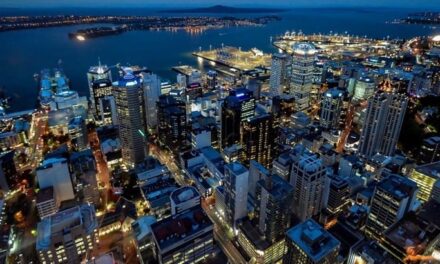
Due to low economic activity in home and abroad and the rising interest rates, prices of residential property have fallen considerably. Referring to this situation, JLL, in its report, says that this is the right time this is the high time we take some property cooling measures.
This step should be taken if we want the residential property market to continue to grow moderately, and become big eventually. The report says we should avoid a quick improvement.
In the fourth quarter, in 2016, private home prices in Singapore eased further. Interestingly, this decline has occurred in thirteen consecutive quarters. This is also the lowest decline in the last six years. This figure was revealed by the Urban Redevelopment Authority (URA).
JLL has somewhat positive news. It says luxury prime property prices, in average, improved by 18 percent, and the properties in the mass market improved by about 10 percent. After the market reached the summit in 2011, residential properties, mostly those that were located in the prime area, saw a price improvement between 25-30 percent.
Citing these figures, Chua Yang Liang, the Head of Southeast Asia Research at JLL, asked for a removal or a reduction of the Additional Buyer’s Stamp Duty (ABSD), mostly for the Singaporeans. He also said that ABSD should be replaced with a tax based during the investment time. According to Liang this will revitalize the demand in the property market, prevent the prices from falling further, and encourage fresh activities.
“As long as TDSR exists, it is very unlikely that just by removing ABSD will allow prices to drop.”
“If we are considering a long-term vision, this kind of move will bring property prices into the line with real income growth. This will set actual price and not the unnaturally low prices. When the prices are very low compared to purchasing power, it will become difficult to get rid of cooling measures,” Liang added.
If these measures continue, Singaporeans will be forced to look for investment in overseas properties. Actually, there is already a large number of Singaporeans investing overseas. The Monetary Authority of Singapore (MAS) data states that until 2013, over $2 billion has been invested in the overseas property by the Singaporeans. However, overseas investment decreased by $0.4 billion in 2015. Watercove Ville – Freehold Seaport Living is another brilliant and practical idea for acquiring a property in Singapore.
Liang says that it is hard to balance between Singapore as an investment-friendly global city and as a country that tries to prevent foreign capital to push market price to the level that is unaffordable to the locals. In Liang’s opinion, if cooling measures are taken, it will benefit the real estate market.