

Table of Contents

Those who have been sitting on the sidelines since 2020 in the hopes that a COVID-19-induced economic slowdown would lower home prices have had a discouraging few years.
Property prices in Singapore, from resale HDB apartments to high-end condos, have been on the rise since the beginning of the epidemic. The Singapore real estate market was resilient in 2022, enduring even war and a stock market meltdown.
URA reported a 0.4% rise in the private residential property price index for 4Q2022. After a 3.8% increase in the third quarter of 2022, this is a significant drop.

There are several elements that influence real estate costs. Interest rates, government policies, the health of the economy, and average salary levels are all examples of such factors. There is little chance that any of these variables are now driving up home prices.
The 3-month compounded SORA is presently 3.10 percent, and mortgage interest rates have climbed sharply (as of 27 January 2023). In a further attempt to slow the real estate market, the government implemented more cooling measures in 2022. In light of the current round of layoffs and the dismal performance of the stock market, nobody is under the impression that the economy is thriving.
Why, therefore, are today’s home prices still rising?
Home prices are going higher due to a shortage of available homes
Everything is subject to the laws of supply and demand. According to the theory of supply and demand, if demand is great, prices will rise to stabilize the market. Imagine taxis for hiring by the individual. Add $20 to your regular price during rush hour, and you’ll find fewer individuals prepared to spend $40 to make it to work on time.
But, the issue here is the degree to which demand is elastic with respect to price. The term “price elasticity of demand” describes the responsiveness of demand to changes in price. Consider the pricing of your go-to egg brand as an example of how a very little change in price may have a significant impact on sales. If the cost of a dozen eggs increases by 50 cents, you may look elsewhere.
Properties have low price elasticity of demand. Housing is both 1) a necessity (everyone needs a place to sleep) and 2) a desirable symbol of one’s social standing in Singapore.
It’s not hard to see why a home is a necessary commodity. After all, we still need a place to lay our heads at night, even if it is the priciest metropolis in the world.
Yet for many Singaporeans, a house is more than simply a place to sleep. There are sufficient dwellings in Singapore for everyone’s needs if that is all we want. There are 1.51 million homes in Singapore, with 1.39 million people calling those homes “home,” according Statista.
Ask yourself or anybody close to you who has made a recent home purchase, and you’ll get a wide range of responses on what a house means to them beyond meeting basic survival needs.
Some grown children buy their own homes so they may move out from under their parents’ roof and start their own families. Yet others may be planning to start a family and value a location in the estate’s community that is convenient to excellent educational institutions. Many people see their houses as more than simply a place to live; they also see them as an investment opportunity when the time comes to sell. In Singapore, our dwelling is more than simply a place to sleep; it becomes an integral part of who we are.
The demand for houses has significantly less price elasticity than the demand for a tray of eggs. Even if costs are raised considerably, it doesn’t mean consumers would stop wanting what it is that’s on offer. In the absence of a decrease in demand, house prices will rise steadily until new construction begins.
Rising home prices may be attributed to a lack of available inventory.
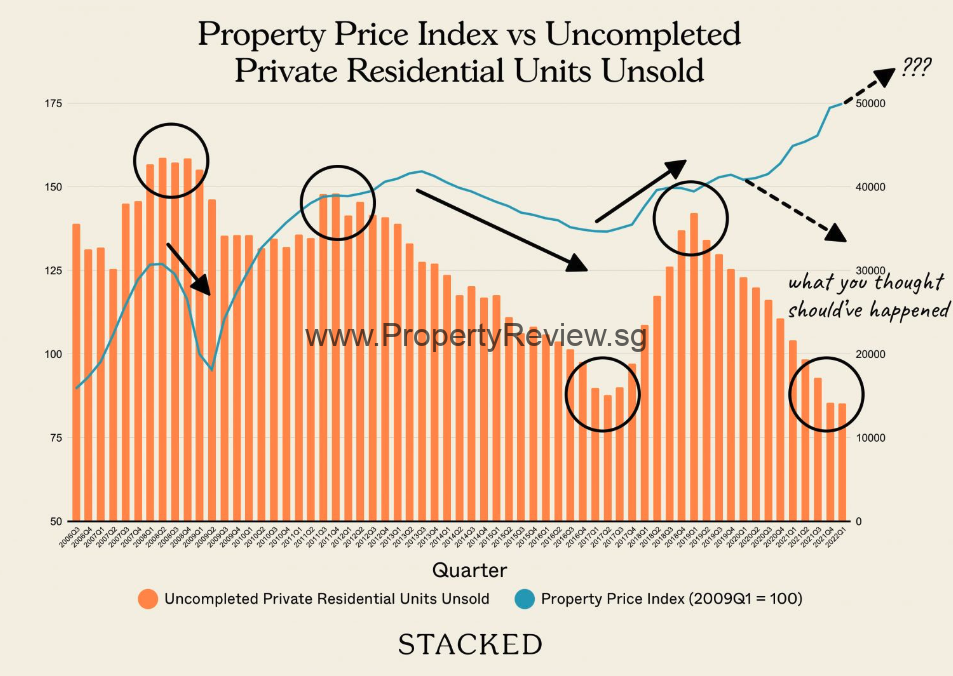
Stabilizing prices is challenging if there isn’t a sufficient influx of newly built homes to meet present demand. Even if we wouldn’t be thrilled to pay 30% more than we would have done so three years ago, we expect that you and many other potential new purchasers would (un)willingly match the asking price.
For obvious reasons, real estate values tend to fluctuate in cycles. More houses will be built as prices rise, either to satisfy rising demand (for the government) or to profit from it (for developers) (for developers). Yet, it takes time to construct new dwellings; typically, it takes three to four years for a residential development to be finished and begin reducing the housing shortage.
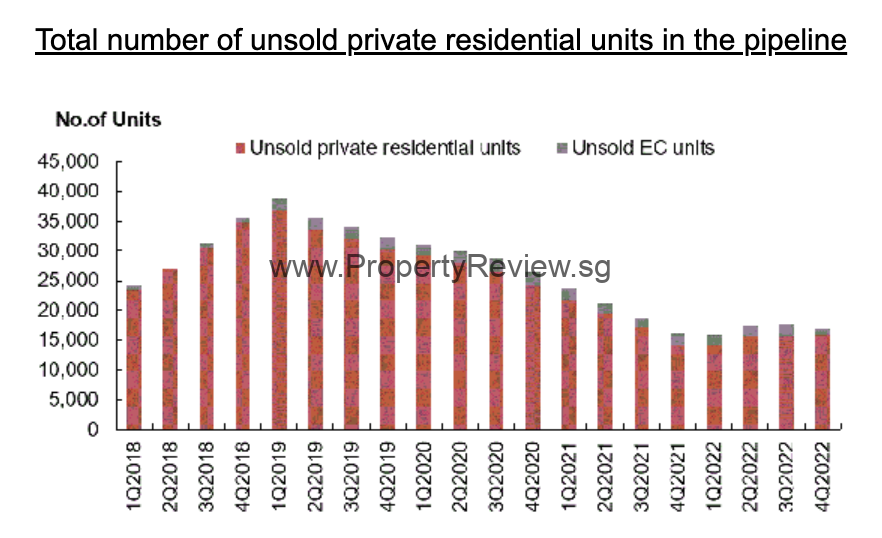
No one could have anticipated the demand that followed COVID-19, as indicated by Stacked Houses. Due to a combination of factors, including development delays and individuals working from home, demand for housing reached an all-time high, driving up prices.
The bright side is that the supply surplus looks to be thinning off. From the first quarter of 2022, there has been a (slight) increase in the number of private residential units that have yet to find a buyer.
Rental Rates as an Indicator for Property Demand and Supply
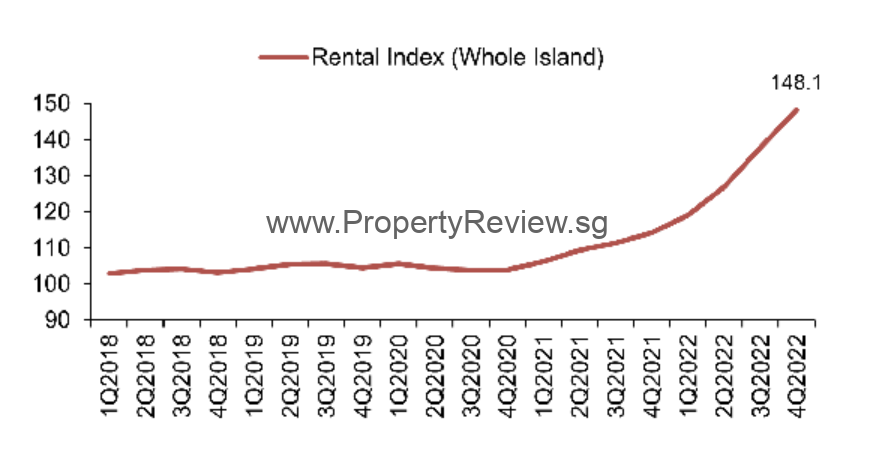
As most leases in Singapore only last for a year or two, fluctuations in interest rates and the state of the economy have less of an impact on monthly payments. In most cases, supply and demand are the only two factors that matter for setting a rental price.
Statistics from the URA show that although both the price and rental indexes climbed, the rental index increased by 8.6% in the third quarter of 2022 and 7.4% in the fourth quarter of same year. If you think that sellers and developers are making excessive profits in Singapore’s current real estate market, wait till you see the rents landlords are demanding.
It’s not like locals there are renting out places for fun and games. People often have compelling reasons for wanting to rent, such as not having enough money to buy a house in the area they desire, not being allowed to buy a home because they are foreigners, waiting for their homes to be built, or just needing to move out of their parents’ residence.
Such people will have to pay more each month in rent if the housing shortage persists and there are not enough flats to go around. Hence, as long as there is a lack of supply on the market, the rental index will continue to increase.
The present demand for houses has not been fulfilled yet, therefore we can anticipate that prices will stay stable as long as the rental index keeps rising. As demand for rentals begins to slow and the rental index begins to fall, however, it may signal that demand is moderating and prices may begin to fall as well.
But there is a catch. There are various elements that might drive prices ahead in the future even if rental rates no longer grow, therefore price increases are still possible even if demand decreases. For instance, the real estate market might be affected even if interest rates go down, the economy improves, or the government eliminates certain cooling measures.
In the meanwhile, we believe that despite increasing interest rates, expecting for house prices to drop in 2023 may be optimistic thinking. When supply reduces demand and interest rates remain high, investors who hope home values will continue rising as they have in recent years may be excessively optimistic.


