Table of Contents
The Singapore property market is set for a big change in 2025. Interest rates are expected to fall, offering a great chance for buyers. This could save buyers a lot of money over time.
With lower borrowing costs, homeowners in Singapore will see cheaper monthly payments. They can also pay off their mortgages quicker.
The uncertainty about how long these good rates will last makes 2025 crucial. Buyers and investors are watching the market closely. They want to make the most of the savings and the growth potential of Singapore’s real estate.
Key Takeaways
- Potential savings of hundreds to thousands of dollars over the lifetime of a loan with a 1-2% drop in mortgage rates.
- Increased affordability and faster mortgage payoff with lower interest rates.
- 2025 is a strategic time to invest in Singapore properties due to the uncertainty of how long favorable rates will last.
- Singapore’s stable economy and growth potential make it an attractive location for property buyers and investors.
- Infrastructure projects like the Jurong Lake District and Greater Southern Waterfront are expected to drive price appreciation in key districts.
Overview of the Current Singapore Property Landscape
Singapore’s property market is strong, thanks to good economy and government support. Prices are stable, despite high demand. This is because of cooling measures by the authorities.
Many factors drive the demand for homes in Singapore. New projects like the Jurong Lake District and MRT lines make areas more appealing. The Housing and Development Board (HDB) also helps keep prices stable and aids first-time buyers.
Smart homes, co-living, and green living are becoming popular. These changes meet the needs of today’s buyers. Singapore’s stable economy and strict real estate rules help keep the market strong.
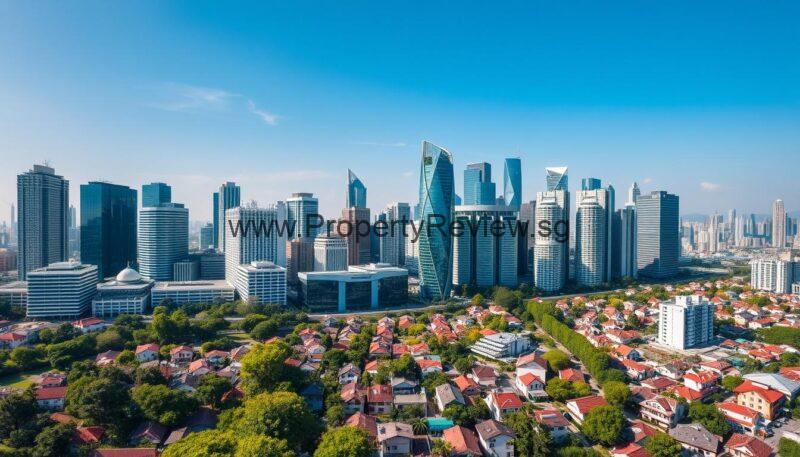
The property market in Singapore is likely to stay attractive for investors. Developers and policymakers must watch the market closely. This ensures a balanced and sustainable housing market in Singapore.
Understanding Interest Rates and Their Importance
Interest rates are key when buying Singapore property. They affect how much you pay to borrow money. This, in turn, changes how affordable homes are and how much you can earn from investments.
The Monetary Authority of Singapore (MAS) sets these rates. They follow global economic trends closely.
As inflation goes down and central banks want to boost the economy, interest rates are likely to fall. This makes borrowing money for homes cheaper. But, home loan deals usually have a 2-year lock-in period. So, you might not see the benefits of lower rates right away.
The Federal Reserve’s actions in the US can indirectly influence Singapore’s interest rates. This is because of how global financial markets work. A rate cut by the Fed can lead to lower borrowing costs in Singapore. But, this effect isn’t always direct because of local conditions and bank policies.
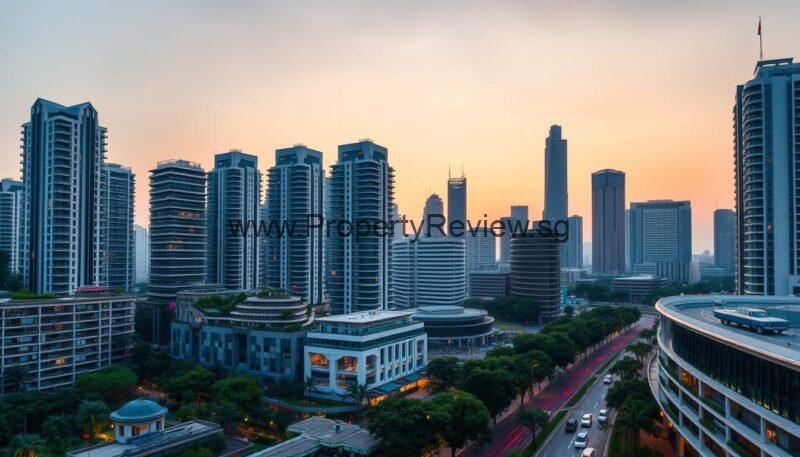
It’s wise for Singapore property buyers and investors to make informed choices. They should understand how interest rates and monetary policy affect the market. Knowing this is key to making good investment decisions.
The 2025 Economic Forecast for Singapore
Singapore’s economy is set to grow, reaching a GDP of US$548.15 billion by 2025. This is a 19% increase over four years. Inflation is expected to stay close to the 2% target level.
The manufacturing sector is forecasted to grow at a 1.48% compound annual growth rate from 2024 to 2029. Consumer confidence is expected to rise with more job growth and a low unemployment rate of 2.1%. Singapore’s real estate agents and the commercial properties sector are set to benefit from these positive signs.

By 2025, developments like the Greater Southern Waterfront, Tengah, Punggol Digital District, and Jurong Innovation District will offer luxury homes, commercial spaces, and business opportunities. Suburban areas like Sengkang, Punggol, and Bishan will see more demand for affordable condos and larger living spaces.
Although the retail and food and beverage industries might see a temporary dip, the outlook for Singapore’s property market is still positive. Stable global interest rates, continued foreign investment, and rising rental demand will help the market stay strong in 2025.
Scenario Analysis: Low vs. High Interest Rates
The Singapore property market is set for big changes, with interest rates being key. It’s important to know how low and high rates might affect Property Investment Singapore and Singapore Condominiums.
In a low-interest rate world, home buyers might find homes more affordable. They could buy bigger properties or homes in better areas. Investors could also grow their portfolios with easier financing. This could lead to more real estate projects starting up.
But, high-interest rates could make buying harder and slow down the market. This affects both individual buyers and big projects like Singapore Condominiums. Even with higher rates, most borrowers can handle mortgage payments, even with a 10% income drop. Still, the market might feel the effects, especially since mortgages have only grown about 1% in Q3.
Understanding how interest rates affect the Singapore property market is complex. As the market changes, it’s vital for buyers and investors to stay updated and adjust their plans.
The Impact of Rising Interest Rates on Property Purchases
In Singapore’s lively property market, rising interest rates make buying homes harder. A 0.5% hike in mortgage rates adds $75,000 in interest over 25 years for a $1 million home. This change might make buyers choose smaller homes or wait to buy.
Higher borrowing costs could lead to price drops as demand changes. Homeowners with variable mortgages might struggle, raising the risk of defaults. For investors, the higher rates mean lower rental income due to higher borrowing costs.
But, interest rates aren’t the only thing affecting the market. Economic growth, population changes, and government policies also matter. Buyers and investors should look at the big picture when deciding on property in Singapore.
The Effects of Low Interest Rates on the Market
Low interest rates in Singapore have made the property market very attractive. Borrowing money is now cheaper, so more people want to invest. This has made the market very competitive, especially in popular areas.
The rental market is also seeing changes. With more investors around, there are more rental properties. This could help first-time buyers and young professionals. It makes owning a home more affordable.
The Singapore government has put in place measures to keep the market stable. For example, the Additional Buyer’s Stamp Duty (ABSD) helps prevent prices from rising too high. These steps help ensure the market grows in a balanced way.
Even with the benefits, there are worries about a property bubble and global economic issues. Investors and policymakers need to be careful. They must work together to keep the Property Investment Singapore and Property Rental Singapore markets healthy.
Government Measures to Mitigate Rate Effects
The Singapore government has taken steps to handle the effects of changing interest rates. These actions aim to keep the property market stable and open to all. This is for both those buying homes and investors.
One major move was the cooling measures. These include changes to the Total Debt Servicing Ratio (TDSR) and Loan-to-Value (LTV) ratios. The TDSR limit was lowered from 60% to 55% in 2021. Also, the ABSD (Additional Buyers Stamp Duty) rates went up. This affects both locals and foreigners to reduce speculation.
First-time homebuyers get help from the government. They offer subsidies and grants, like the Enhanced CPF Housing Grants. These help make owning a home easier, especially for Singaporeans. The Housing and Development Board (HDB) also helps by providing affordable housing and managing new units.
These measures help the government balance demand, affordability, and market sustainability. They aim to keep the Singapore Housing Market and Real Estate in Singapore healthy.
Future Trends to Watch in Singapore Property Market
The Singapore property market is changing fast. Neighborhoods like Punggol and Woodlands are becoming more popular. They offer good value and easy access, attracting investors and homebuyers.
New technologies are also changing the market. We’re seeing more green and smart homes. People want homes that are good for the planet and have the latest tech. There’s also a trend towards homes that can be used for both living and working.
Technology is making it easier to buy and sell properties. Digital tools help find, view, and buy homes. This makes the process smoother for everyone involved.
These trends will shape the future of Singapore’s property market. By keeping up with these changes, condos and real estate agents can thrive. They’ll be ready for what’s next.
Conclusion: Navigating the Changing Landscape
Singapore’s property market is changing in 2025. Buyers and investors need to keep up with interest rates and economic signs. They should look at new areas and be ready to buy when rates are good.
Investors should spread out their money and think about future growth. This way, they can make smart choices.
The Singapore property market is growing, with more new homes and sales. But, interest rate changes are important to watch. Buyers and investors should stay alert and get expert advice to succeed.
Doing deep research, being flexible, and thinking long-term are crucial for smart property investment in Singapore. By staying informed and active, people can find good chances and handle market changes well.