

Table of Contents
Buying a home in Singapore in 2026 may feel less urgent than it did during the sharpest periods of the recent property cycle. Prices are still moving, new flats are being released and good homes can attract competition, but the pace of change gives buyers more time to compare. That extra breathing room matters: a considered decision can be more valuable than trying to guess the next quarter.
A slower market is not the same as a weak market
The latest reported numbers point to moderation rather than a dramatic reversal. The Urban Redevelopment Authority (URA) reported that private residential prices rose 0.5% in Q2 2026, compared with a 0.9% increase in Q1. These are reported figures, not forecasts. They describe what happened in those quarters; they do not promise that prices will rise or fall at the same rate next.
For buyers, the practical takeaway is that the market may reward patience. A smaller quarterly increase does not automatically make every property affordable, and it does not mean sellers will accept any offer. It does suggest that buyers have a better chance to study a unit’s condition, compare nearby transactions and check whether the monthly payment fits their life beyond the excitement of the viewing.
There is useful background in this overview of what to watch in the Singapore property market in 2026. The important habit is to treat broad statistics as context, then make the property-level decision using evidence that is much closer to home.
More supply gives buyers another reference point
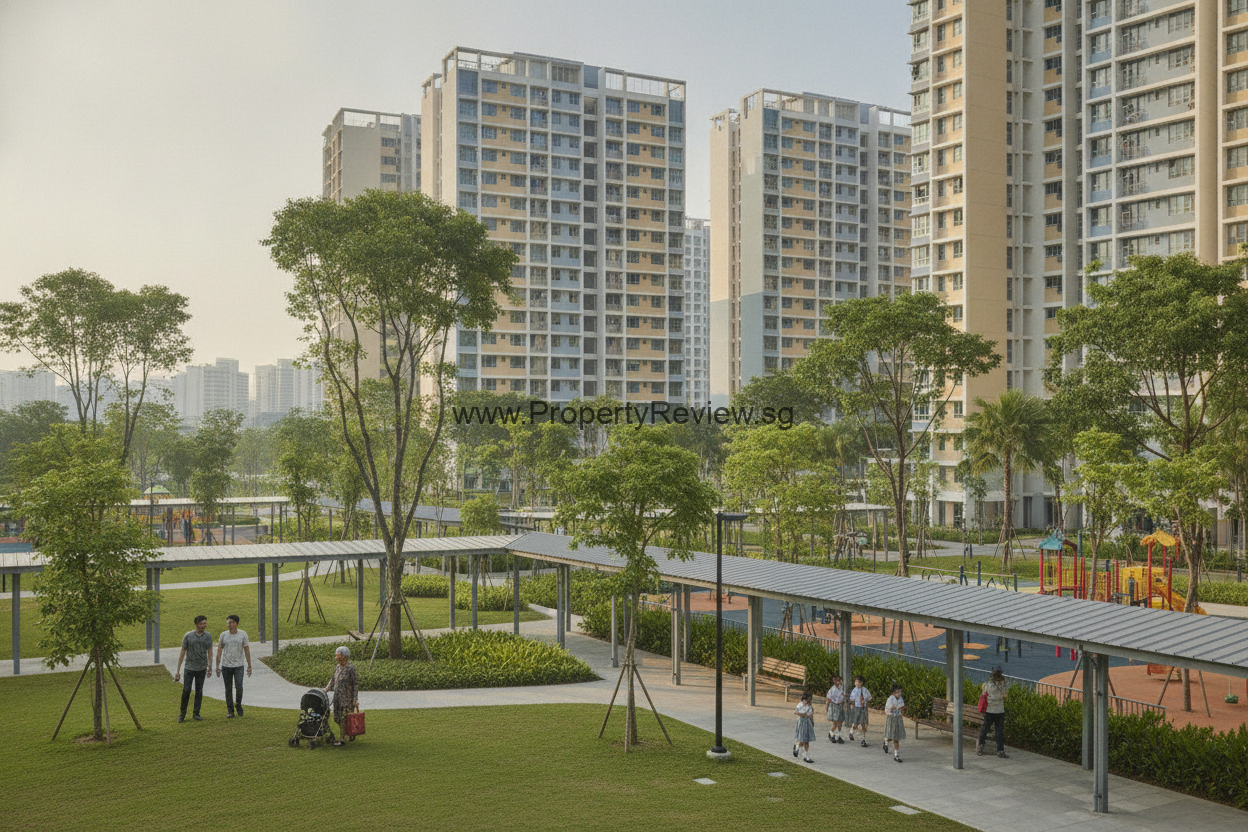
Public housing supply is another reason buyers may have more room to think. HDB launched 6,952 flats in June 2026 and plans about 19,600 flats across 2026. Again, these are reported supply figures, not forecasts of prices or demand. The launches do not make every location interchangeable, but they give households more options to assess based on timing, eligibility, location and waiting periods.
Supply can also affect how people frame a private-market purchase. A buyer who is eligible for a new flat may compare the waiting time and location with resale choices. Someone who needs a home sooner may decide that convenience has a real value. Neither choice is automatically better. The point is to make the trade-off visible instead of assuming that the most expensive or newest option is the safest one.
Location still does most of the practical work
New projects and new flats can change the feel of an area, but they do not erase everyday constraints. Check the journey to work, school access, transport reliability, noise at different times and the walk between the block and essential shops. A map can show distance; only a visit can show whether the route is comfortable in rain, heat or after dark.
It is also worth asking how much future construction you can tolerate. A nearby development may eventually bring better amenities, but construction years can mean dust, traffic and changing views. Buyers should record both the possible benefit and the inconvenience, rather than treating a planning announcement as a guaranteed upgrade.
Use the extra time to test the home, not just the price
A slower pace is useful only if buyers use it well. During a viewing, look past the staging. Open windows and cupboards. Check water pressure, signs of damp, the condition of flooring and whether built-in items are still serviceable. Ask what has been repaired, when it was done and whether invoices or maintenance records are available.
For older flats, the questions become even more important. Lease length, remaining upgrades, lift access, plumbing, electrical capacity and renovation restrictions can all affect the cost of ownership. These questions worth asking when buying an older flat can help turn a general viewing into a more disciplined inspection.
Do not rely on one viewing if the property is a serious candidate. Visit at a different time of day, listen for traffic and neighbours, and check how much natural light reaches the rooms. If a seller is pushing for an immediate decision, that is a reason to verify more carefully, not necessarily a reason to walk away.
Make the budget resilient to ordinary surprises
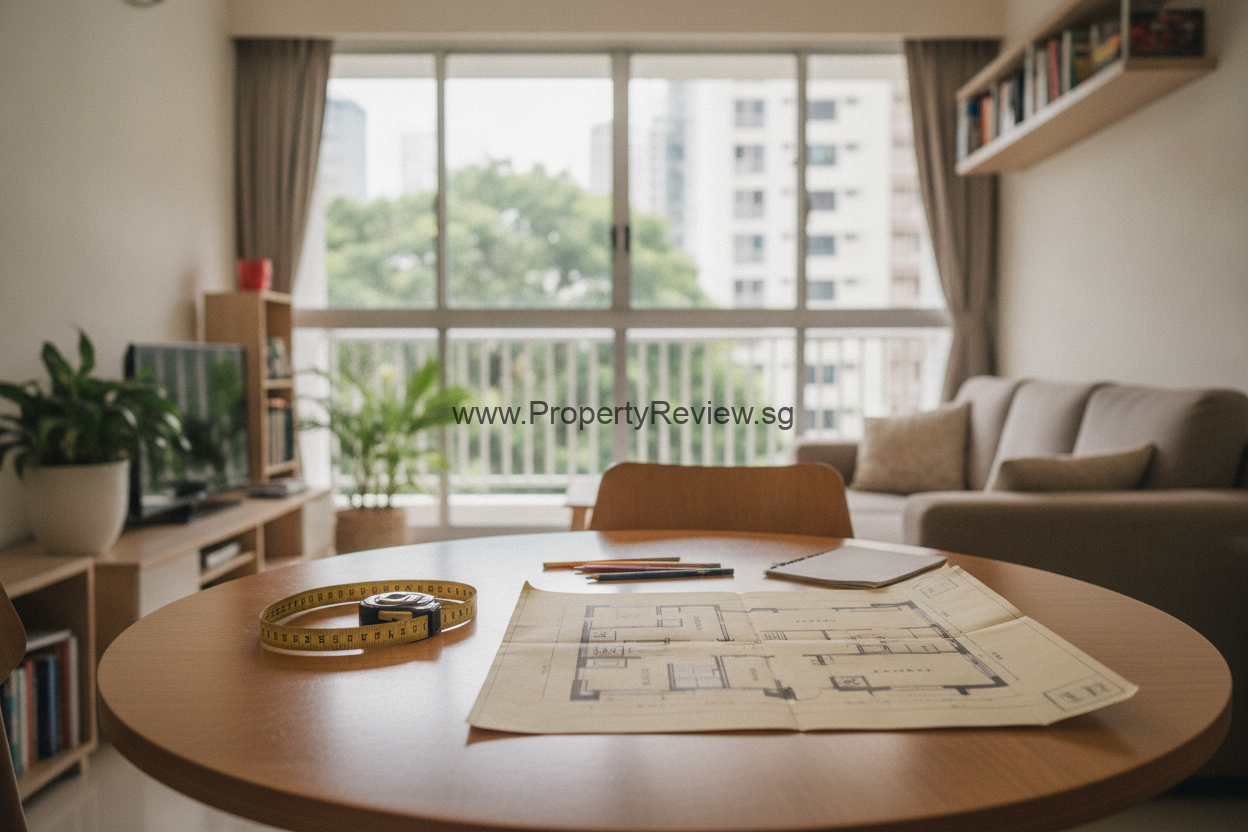
The purchase price is only the most visible part of the budget. Include the down payment, stamp duties, legal costs, agent fees where applicable, renovation, furniture, insurance, maintenance and a reserve for repairs. If the property is a condominium, review the maintenance contribution and ask whether major works are being discussed.
Borrowing costs deserve a calm, conservative test. Calculate the monthly payment at the expected rate, then run a second version with a higher rate or a temporary income disruption. A home that works only under perfect conditions is not necessarily affordable. Buyers should preserve enough cash for emergencies rather than using every available dollar to improve the offer.
Keep the decision tied to the household
Affordability is personal. A couple planning for children may value an extra room more than a shorter commute. An older owner may prioritise a lift and a low-maintenance layout. A single buyer may prefer flexibility over maximum floor area. Write down the non-negotiables and the items that are merely attractive. This makes it easier to compare homes without moving the goalposts after every viewing.
It is sensible to get an in-principle assessment and confirm the relevant rules before making an offer. The number a lender is willing to provide is not the same as the number a household should borrow. Leave room for life to change, especially if the purchase will be followed by renovation or a move between jobs.
What landlords and investors should read differently
Owner-occupiers and investors can look at the same market and reach different conclusions. A landlord needs to test achievable rent, vacancy periods, furnishing costs, property tax, maintenance and financing. Gross rental yield alone can hide a thin margin. Ask what happens if the unit takes longer to rent, if a tenant needs a repair or if competing supply gives renters more choice.
Rental demand may remain useful, but it should not be treated as a guarantee. A sensible way for landlords to respond to rental demand is to focus on the home’s condition, pricing and tenant experience rather than chasing a headline number. A realistic plan is more durable than assuming that the strongest recent rent will continue indefinitely.

A practical way to decide when the market feels uncertain
Start with three lists: properties that fit the budget, properties that fit the daily routine and properties that remain comfortable under a less favourable financial scenario. The overlap is more useful than a ranking based only on price or size. Keep notes on each viewing, including the asking price, likely work, recurring costs and the reasons the home might not suit you.
Then set a decision window rather than an artificial deadline. Use the time to compare like with like, speak with the relevant professionals and revisit the numbers after any change in loan terms or household plans. If a property is right, a careful process should make the offer stronger, not weaker. If it is wrong, patience can prevent an expensive compromise.
Conclusion
The Singapore property market in 2026 is offering buyers something valuable: more room to think. URA’s reported 0.5% private residential price increase in Q2, after 0.9% in Q1, and HDB’s reported 6,952-flat June launch alongside plans for about 19,600 flats across 2026 are useful context, not forecasts. They do not remove the need for research, and they do not tell every household what to buy.
They do create an opportunity to slow down, compare alternatives and stress-test the budget. Focus on the home you can live with, the costs you can carry and the evidence you can verify. In an uncertain market, that is often a better advantage than trying to call the next price move.


