Table of Contents

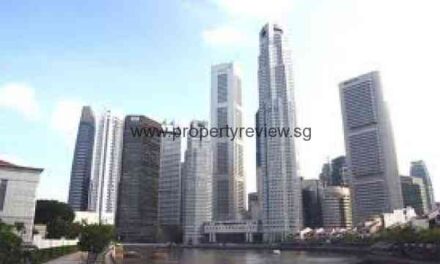
Singapore as seen from Orchard road. Marina Bay in the background.
Some homeowners may be concerned about their ability to save money due to increased house loan rates. The Singapore Overnight Rate Average (Sora) for three months has increased by approximately 220 basis points since the beginning of the year, reaching 2.45% annually as of October 28, 2022.
The monthly payment for a borrower paying 1% + three months’ Sora on a million-dollar house loan with a 25-year term climbs by more than S$1,100 when the interest rate jumps from 1.2 percent per year to 3.5 percent per year.
Think of the publicly traded real estate investment trusts and organizations, which may be impacted especially hard by the expected increase in interest rates.
Adverse Consequences
To begin, higher interest rates increase expenses and decrease profits. If the cost of borrowing money increases from 1.5% per year to 3.5% per year, the cost of a S$500 million real estate development project that relies on debt for 66% of its financing would rise by 4%. (assuming an average loan period of three years). A gross profit margin of 12% would fall to 8% in this case.
The return on equity drops from 5.7% to 4.3% when an investment property’s financing consists of 40% debt but only yields 4% in yearly net property income.
Second, equity investors evaluate property groups and real estate investment trusts using harsher discount rates, which reduces the trading prices of listed property plays (Reits).
When compared to the return of a Singapore dollar fixed deposit, which is now at 0.5% per year, a Reit that pays a distribution yield of 4% per year may seem more appealing. However, the needed distribution yield from a Reit might be as high as 6% annually when the annual return on a comparable fixed deposit is more than 2.5%.
The yield on Singapore’s five-year government bonds has risen from 1.4% annually at the beginning of 2022 to over 3.20% as of Oct. 28, 2022, suggesting that an investor who benchmarks Reits against these bonds may need a distribution yield of over 180 basis points more from a Reit now than at the beginning of the year to keep up.
Dividend yield increases from 5% to 6% per year if the unit price of a Reit falls by 17%, assuming distribution per unit remains same.
Resilient Property Prices in Singapore
The situation is not entirely hopeless, however: The robustness of Singapore’s real estate market and high rental rates gives businesses in the property industry considerable pricing leverage. Companies in the real estate industry may also profitably offload assets located in other countries for more than they are worth.
Because of Singapore’s newfound openness in the face of life with Covid, the rental and occupancy rates of several commercial spaces there have increased. International tourism is on the upswing, and large-scale events like the Formula 1 Singapore Grand Prix are boosting hotel bookings.
Some REITs had favorable rental reversions and/or increased net property income and/or distribution income for the period ending in September. According to the management of CapitaLand Integrated Commercial Trust: C38U -1.06% (CICT), leasing activity in the trust’s Singapore shopping malls began to pick up in Q3 2022, with demand being driven mostly by F&B (food and beverage) operators. Perhaps multiple Reits can deliver the increased income required by investors by increasing the performance of their assets.
Singaporeans have a healthy appetite for real estate. According to the Urban Redevelopment Authority, private housing prices in Q3 2022 increased by 13.6% annually. Due in large part to the significant launches of Lentor Modern and Sky Eden@Bedok, which established new pricing standards for suburban living, the number of newly constructed private houses sold in September increased by more than 100 percent month over month.
For example, in late September, the trustee of ESRsigned a sales contract to sell the trust’s purpose-built industrial facility at 2 Jalan Kilang Barat in Singapore for S$35.3 million, which is a premium over value of 21.7 percent.
Meanwhile, in October Stamford Land agreed to sell the Stamford Plaza Auckland hotel property in New Zealand for NZ$152 million (S$123 million), or roughly 8.5% over market value as of the end of March. Sir Stamford, a hotel in Sydney, Australia’s Circular Quay, is another property that Stamford Land is selling.
In early October, the manager of EC World Reit: BWCU 0% announced the trust’s proposed divestment of indirect interests in stage 1 properties in China, including Bei Gang Logistics and Chongxian Port Logistics, at agreed property values of 1.2 billion yuan (S$243 million) and 820 million yuan, respectively, representing a premium of 2.9% to each of their end-June appraised valuations. The management plans to utilize the money from the sale of the assets to pay off debts and make a special dividend to the unitholders of around 451 million yuan.
The possibility exists that listed property firms may feel the effects of increased interest rates via a decrease in demand for their goods. The recent introduction of cooling measures and the prospect of higher house loan rates might dampen demand for new homes in Singapore and lead to a decline in prices.
It’s possible that customers’ ability to spend may decrease as a result of increased loan expenses, which could have repercussions for industries like retail and hospitality. As firms’ cash flow and development plans are impacted by increasing borrowing costs, the demand for office and industrial space may decrease.
Large structures may have less access to capital if interest rates rise. Due to its role as a refuge and international gateway, premium commercial buildings in Singapore may outperform compared to other markets if investors place a heavy weight on the country. However, if investors factor in greater capital expenditures when weighing purchase options, building values might fall.
In the last several weeks, the market value of publicly traded real estate companies has plummeted. On October 28, 2022, shares of City Developments Ltd were trading at a 54% discount to their end-June net asset value (NAV), after adjusting for the inclusion of fair value gains from investment properties. Shares of CICT were trading at an 11% discount to end-June NAV.
For as long as demand remains robust for real estate, keeping capital values and rental rates stable, the stock market may be sufficiently pricing in the headwinds from rising interest rates.